What If inknbox Turned Hilma’s Symptom-Based Customer Journey Into Up to 40% More Lifecycle Revenue?
- Lifecycle Marketing
- 22 Minutes
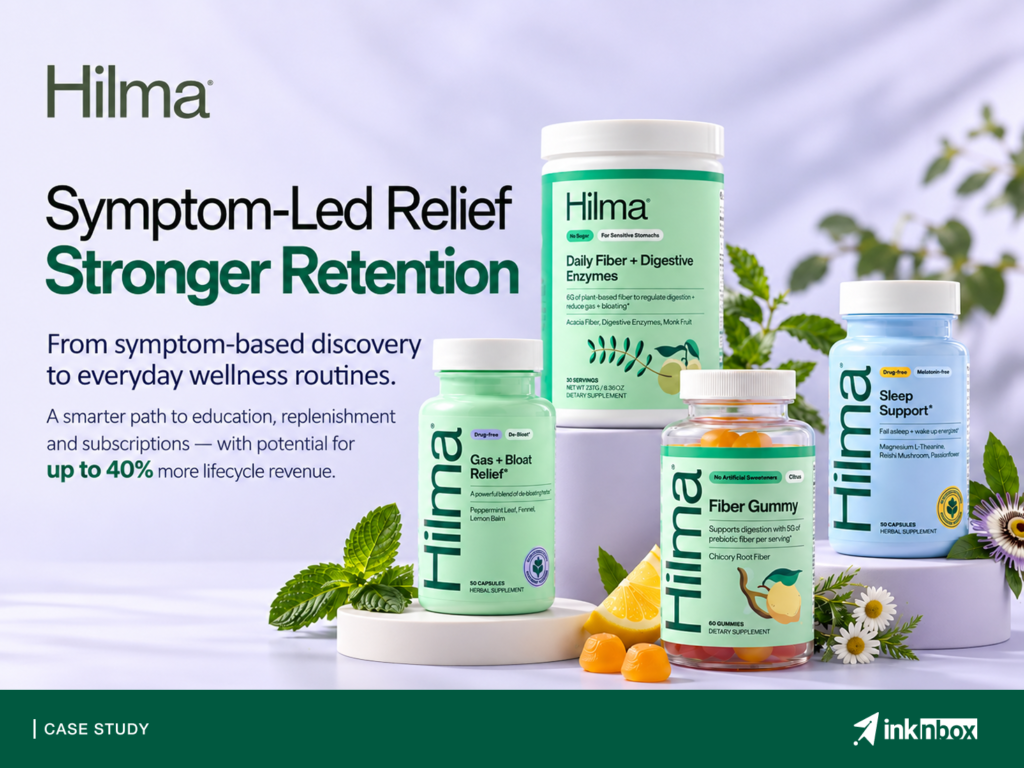
A strategic “What If” lifecycle marketing case study for Hilma
This is an independent strategic case study created by inknbox.
inknbox does not claim to manage Hilma, and this case study is not intended to criticize Hilma, its internal team, or any current agency partner.
This case study is part of our “What If” series, where we analyze established eCommerce and DTC brands and show how inknbox would structure their lifecycle marketing system if we were responsible for retention, repeat purchases, subscription adoption, referral, replenishment, and long-term customer value.
Hilma already has a strong brand foundation. The brand sells natural remedies for common wellness concerns such as gas, bloating, indigestion, occasional constipation, digestion, gut health, sleep, tension, immune support, seasonal sinus support, and kids’ digestive support.
Hilma’s public positioning is built around natural remedies that actually work, supported by doctor-formulated products, clinical research, third-party testing, clean-label standards, and major retail visibility.
The opportunity is not basic email marketing.
The bigger question is:
What if Hilma’s symptom-based shoppers, retail buyers, DTC customers, subscribers, bundle buyers, and content readers were connected through one intelligent lifecycle marketing engine?
That is where inknbox believes Hilma could unlock up to 40% additional lifecycle-driven revenue through stronger email/SMS architecture, symptom-based segmentation, product-specific automation, subscription retention, replenishment logic, bundle upgrades, retail-to-DTC capture, referral, and Meta retargeting.
Overview
Hilma operates in one of the strongest categories for lifecycle marketing: problem-solution wellness products with repeat-purchase behavior.
Customers do not all come to Hilma for the same reason. One customer may want fast relief from gas and bloating. Another may need dairy and gluten meal support. Another may be looking for a daily fiber routine. Another may be a parent shopping for a child’s digestive support. Another may be preparing for travel. Another may be looking for sleep or tension support.
That means the lifecycle system should not treat all customers the same.
Hilma’s strongest CRM opportunity is to structure the customer journey around:
- the symptom the customer is trying to solve
- the product they viewed
- the product they bought
- whether the product is acute-use or routine-based
- whether the customer is a one-time buyer or repeat buyer
- whether they are subscription-ready
- whether they came from retail, DTC, content, Meta, or Amazon-style discovery
- whether they need replenishment, bundle expansion, or education
Growth Area | Lifecycle Opportunity |
New visitor conversion | Use a symptom quiz, product finder, and clean-remedy lead capture instead of a generic newsletter signup. |
First purchase activation | Route subscribers by concern: bloat, constipation, dairy/gluten digestion, daily fiber, sleep, tension, immunity, or kids’ gut health. |
Repeat purchase growth | Trigger replenishment and use-case reminders based on product type, capsule count, serving count, and purchase date. |
Subscription growth | Convert repeat buyers into subscribers by framing subscriptions around “never run out of your go-to remedy,” not only discount savings. |
Average order value | Use bundle logic around overlapping concerns, such as gas + bloat, digestive enzymes, fiber, and regularity support. |
Long-term retention | Build symptom-specific post-purchase education, replenishment, subscription save flows, winback, and sunset logic. |
Paid media efficiency | Sync Klaviyo segments to Meta for product-specific browse recovery, retail-to-DTC nurturing, subscription retargeting, and winback ads. |
Klaviyo should operate as Hilma’s central lifecycle CRM, not simply an email-sending platform.
The system should connect:
- Shopify or commerce data
- product views
- cart events
- checkout events
- SKU and product category data
- subscription status
- symptom preference
- content behavior
- retail buyer registration
- email/SMS engagement
- Meta audience sync
This would allow Hilma to move from broad promotional email into a true lifecycle revenue engine.
Hilma’s Background
Category | Details |
Brand Positioning | Natural remedies that actually work, built around clean-label products, doctor formulation, scientific support, and accessible wellness relief. |
Core Product Type | Natural remedies and supplement-style wellness products for digestion, gut health, sleep, tension, immunity, seasonal support, and kids’ digestive needs. |
Main Product Categories | Digestion, gas + bloat, daily fiber, digestive enzymes, constipation/regularity, heartburn/indigestion, sleep, tension, immune/respiratory, travel kits, kids’ digestive support, bundles. |
Brand Communication Style | Clear, educational, approachable, science-backed, clean-label, symptom-led, and retail-friendly. |
Customer Behavior Type | Problem-aware shoppers who may need fast relief, daily routine support, travel support, family support, or repeat replenishment. |
Core Revenue Opportunity | Symptom-based personalization, subscription retention, replenishment reminders, bundle upgrades, and retail-to-DTC customer capture. |
Audience Characteristics | Health-conscious consumers, digestive relief seekers, clean-label shoppers, parents, travelers, people with recurring gut concerns, and retail buyers who may not yet be owned CRM customers. |
Marketing Opportunity | Turn anonymous symptom-based shoppers into segmented email/SMS customers with personalized education, product routing, and repeat-purchase logic. |
Retention Potential | High, because many products are consumable, routine-based, replenishable, or connected to recurring concerns such as digestion, fiber, meal support, sleep, seasonal sinus support, and kids’ regularity. |
Ideal Automation Structure | Symptom-first lifecycle architecture supported by product-specific browse flows, usage education, replenishment, subscription conversion, bundle logic, retail-to-DTC capture, and Meta retargeting. |
Hilma is not a beginner CRM prospect.
The stronger strategic positioning is:
Hilma already has retail momentum, product-market fit, and science-backed authority. The next opportunity is turning symptom-specific shoppers into owned, repeat, and subscription customers through advanced lifecycle marketing.
The Core Growth Hypothesis
Our hypothesis is simple:
Hilma could generate up to 40% additional lifecycle-driven revenue if its customer journey were rebuilt around symptom intent, product education, replenishment timing, subscription readiness, bundle logic, retail-to-DTC capture, and cross-channel retention.
This additional revenue would not come from one single flow.
It would come from the combined effect of multiple lifecycle systems working together:
Revenue Lever | Expected Role |
Welcome flow optimization | Convert new subscribers by routing them into bloat, constipation, dairy/gluten, daily fiber, sleep, tension, immunity, or kids’ gut health journeys. |
Browse and checkout abandonment | Recover shoppers with product-specific education instead of generic cart reminders. |
Post-purchase education | Teach proper product usage, ingredient logic, timing, and expected use cases to improve confidence and repeat purchase. |
Replenishment automation | Bring customers back before they run out of capsules, powder, gummies, or travel products. |
Subscription conversion | Turn repeat buyers and routine users into subscribers through convenience, “never run out,” and remedy cabinet positioning. |
Cross-sell and bundle logic | Increase AOV by recommending complementary products based on symptom overlap. |
SMS reminders | Use SMS for high-intent checkout recovery, replenishment windows, subscription reminders, and time-sensitive seasonal needs. |
Referral program | Turn satisfied repeat buyers, parents, and subscribers into acquisition drivers. |
Meta retargeting audiences | Retarget symptom segments, product viewers, cart abandoners, retail registrants, and lapsed buyers with matching ad creative. |
Winback and sunset flows | Recover inactive buyers while protecting list quality and deliverability. |
The main strategic shift is moving from product promotion to symptom-led lifecycle orchestration.
Priority-Based Tools & Automation Infrastructure
Layer | Tool / System | Purpose |
Core CRM | Klaviyo | Email, SMS, flows, segmentation, campaign orchestration, customer lifecycle logic. |
Commerce Platform | Shopify or inferred commerce platform | Purchase data, SKU data, cart events, checkout events, product views, subscription status. |
Customer Data Layer | Klaviyo profile properties | Symptom preference, product category, SKU, usage cycle, subscription status, bundle interest, retail source, content interest. |
Automation Logic | Klaviyo flows + commerce events | Triggered messaging based on behavior, purchase history, replenishment timing, and customer concern. |
Subscription Layer | Subscription platform / Shopify subscription logic | Subscription conversion, subscriber education, skipped order recovery, cancellation save flow, renewal reminders. |
Analytics | Klaviyo analytics + GA4 + Shopify reports | Revenue attribution, flow revenue, LTV, repeat purchase, subscription conversion, campaign performance. |
Retargeting | Meta Ads custom audiences | Product-specific retargeting, symptom retargeting, newsletter subscriber conversion, replenishment reminders, winback. |
Lead Capture | Website popups, symptom quiz, retail QR landing pages, Meta lead pages | Email/SMS list growth and zero-party data capture. |
Referral | Referral or loyalty tool | Give/get offer, customer advocacy, review-to-referral, subscriber referral logic. |
Recommended profile properties
Hilma should collect and maintain properties such as:
Profile Property | Strategic Use |
Primary symptom | Routes customers into bloat, constipation, dairy/gluten, daily gut health, sleep, tension, immunity, or kids’ gut support. |
Product category viewed | Triggers category-specific education and Meta retargeting. |
Last product purchased | Determines post-purchase education and replenishment timing. |
SKU purchased | Powers exact usage cycle and replenishment logic. |
Product format | Capsule, powder, gummy, electrolyte, bundle, kit, kids’ product. |
Serving count / capsule count | Calculates likely reorder timing. |
Purchase source | DTC, retail registration, Meta quiz, blog, email, SMS, referral. |
Subscription status | Suppresses subscribers from one-time reorder pushes and routes them into subscriber education. |
Bundle interest | Identifies AOV expansion opportunity. |
Parent / child buyer | Routes Hilma Kids customers into parent-focused education. |
Travel use case | Triggers travel kit and digestive enzyme recommendations. |
Content interest | Turns blog readers into product-specific nurture paths. |
Discount behavior | Separates full-price buyers from discount-sensitive buyers. |
Engagement tier | Controls email/SMS frequency and deliverability protection. |
This data layer matters because Hilma’s products are not interchangeable. A customer viewing Sleep Support should not receive the same message as a customer viewing Gas + Bloat Relief or Happy Tummy Fiber Powder.
Lifecycle Architecture Design
Hilma’s lifecycle system should be built around four major stages.
Lifecycle Stage | Main Goal | Strategy |
Acquisition | Capture new leads and first-party data | Use symptom quiz, retail QR capture, Meta lead funnels, product-specific popups, and content capture. |
Activation | Convert subscribers and first-time buyers | Send symptom-specific welcome journeys, product education, social proof, trust-building, and first-purchase CTAs. |
Retention | Increase repeat purchases and replenishment | Use post-purchase education, capsule/serving-based reorder windows, subscription conversion, and SMS reminders. |
Expansion | Increase customer lifetime value | Use bundle upgrades, category expansion, referral, VIP logic, and Meta retargeting. |
Customer movement through the lifecycle should depend on:
- what symptom they selected
- what product they viewed
- what product they added to cart
- what they started checkout with
- what they purchased
- whether they bought capsule, gummy, powder, electrolyte, bundle, or kids’ product
- whether they bought one-time or subscription
- whether they came from a retailer or Hilma’s DTC site
- whether they read content on The Cabinet
- whether they are due for replenishment
- whether they are subscription-ready
- whether they are lapsed, VIP, or discount-sensitive
Lead Capture Strategy
1. Website Popup System
Hilma’s lead capture should not rely only on a generic discount popup.
The better system is a symptom-first lead capture architecture.
Visitor Behavior | Lead Capture Strategy |
First-time visitor | Offer a “Find Your Natural Remedy Routine” quiz. |
Digestion product browser | Offer “Get your personalized gut support routine.” |
Sleep/tension browser | Offer “Build your clean-label night + stress support routine.” |
Kids’ product browser | Offer “Get the parent guide to gentle tummy support.” |
Returning visitor | Show the product or category they viewed previously with a personalized CTA. |
Exit-intent visitor | Offer 10% off or a symptom guide in exchange for email/SMS. |
Email + SMS signup | Add an extra incentive, such as early access, product tips, or reorder reminders. |
Popup concept
Headline:
Find Your Natural Remedy Routine
Supporting copy:
Tell us what you’re trying to support — bloat, digestion, regularity, sleep, tension, seasonal sinus support, or your child’s tummy — and we’ll send your personalized Hilma routine.
CTA:
Take the Quiz
Secondary popup for product browsers
Headline:
Not sure which remedy fits your concern?
Supporting copy:
Get a personalized recommendation based on your symptoms, timing, and routine.
CTA:
Find My Hilma Match
SMS consent language must be clear, compliant, and separate from email consent.
2. Paid Ads Lead Capture Landing Page
Meta and Google traffic should not always be pushed directly to product purchase.
Many wellness shoppers need education before buying, especially when the product is related to digestion, regularity, sleep, or kids’ wellness.
A paid lead capture page should include:
- symptom quiz
- concern selection
- fast relief vs daily support path
- adult vs kids routing
- product recommendation
- doctor-formulated trust points
- clean-label reassurance
- best-seller CTA
- subscription or bundle option
- email/SMS capture before showing full routine
Recommended funnel
Step | Strategy |
Meta ad hook | “Bloated, backed up, or dealing with digestion issues? Find your Hilma remedy routine.” |
Landing page | Symptom quiz with product recommendation. |
Lead capture | Email required; SMS optional with added incentive. |
Result page | Personalized product or bundle recommendation. |
Follow-up | Klaviyo flows based on selected symptoms. |
Retargeting | Sync quiz segments to Meta for symptom-specific ads. |
The goal is not only immediate conversion.
The bigger goal is to turn cold traffic into owned first-party data that Hilma can nurture through email, SMS, and Meta retargeting.
3. Referral Program
Referral should be built into the customer journey, not hidden in the footer.
User Type | Offer |
Referred friend | 15% off first Hilma order or a starter remedy bundle incentive. |
Existing customer | 15% off the next order, store credit, or bundle credit after the friend purchases. |
Best referral triggers
- after second purchase
- after positive review
- after subscription signup
- after reorder
- after bundle purchase
- after Hilma Kids repeat purchase
- after UGC submission
- after customer reaches VIP status
Referral message example
Help someone build a cleaner medicine cabinet. Share Hilma with a friend and help them find natural support for digestion, bloat, sleep, tension, seasonal sinus support, or kids’ tummy needs. They get rewarded, and so do you.
Core Klaviyo Flow System
This is where Hilma’s lifecycle revenue opportunity becomes strongest.
Hilma should not use generic flows. Every flow should be routed by symptom, product category, product format, and purchase behavior.
Below is a curated selection of email design concepts illustrating how the proposed Klaviyo flow system could be translated into a cohesive, conversion-focused customer experience. While the complete lifecycle strategy includes several additional flows, this preview highlights three core sequences: four selected emails from the seven-email Welcome Flow, one email from the three-email Browse Abandonment Flow, and one email from the three-email Checkout Abandonment Flow. The remaining flows would be developed with equally tailored, brand-aligned email designs to ensure consistency across the full lifecycle marketing system.
Flow Breakdown by Lifecycle Stage
Symptom-Based Welcome Flow
Purpose:
Convert new subscribers into first-time buyers while educating them on Hilma’s product ecosystem.
Entry criteria:
- Joins email list
- Submits popup
- Completes symptom quiz
- Joins from Meta lead page
- Registers retail purchase
- Has not purchased yet
Exit/suppression criteria:
- Purchases any product
- Enters checkout abandonment
- Suppressed/unsubscribed
- Already active subscriber
Timing | Purpose | |
Email 1 | Immediately | Welcome, brand promise, quiz result or selected symptom, best-seller CTA. |
Email 2 | +1 day | Explain Hilma’s clean-label, doctor-formulated, science-backed approach. |
Email 3 | +2 days | Product finder: fast relief vs daily support vs kids’ support vs travel support. |
Email 4 | +3 days | Product-specific proof, reviews, ingredient education, and objection handling. |
Email 5 | +5 days | First-purchase CTA with symptom-specific recommendation. |
Email 6 | +7 days | Bundle or subscription angle based on product type. |
Email 7 | +10 days | Final conversion email with personalized routine recommendation. |
Welcome segmentation logic
Customer Concern | Email Angle |
Gas + bloating | Fast relief after meals, travel support, Gas + Bloat Relief, Debloat + Digest Bundle. |
Constipation / regularity | Gentle regularity education, fiber support, hydration, Occasional Constipation Relief, Daily Fiber. |
Dairy/gluten digestion | Take-before-meal education, trigger food support, Dairy + Gluten Digestive Enzymes. |
Daily gut health | Fiber gap education, daily routine, Daily Fiber + Digestive Enzymes, Fiber Gummy, Daily Pre + Probiotic + Herbs. |
Sleep | Night routine, melatonin-free support, Sleep Support. |
Tension | Stress moments, head tension support, Tension Relief. |
Seasonal sinus | Pollen Defense, non-drowsy support, seasonal timing. |
Kids’ digestive support | Parent trust, gentle tummy education, Happy Tummy Fiber Powder, Happy Tummy Regularity Support. |
Travel | Travel Essentials Kit, Gas + Bloat, Digestive Enzymes, Stomach Recover + Hydrate. |
Browse Abandonment Flow
Purpose:
Bring back visitors who viewed a specific product but did not add to cart or purchase.
Entry criteria:
- Viewed product
- Did not add to cart
- Did not purchase
- Is known email/SMS subscriber
- Not currently in checkout abandonment
Exit/suppression criteria:
- Adds to cart
- Starts checkout
- Purchases product
- Is active subscriber for that product
- Has received the same product browse flow recently
Purpose | |
Email 1 | Exact product reminder + core benefit. |
Email 2 | Product-specific education, ingredients, proof, reviews, and timing. |
Email 3 | Objection handling, bundle option, subscription option, or purchase CTA. |
Product routing logic
Viewed Product | Browse Abandonment Angle |
Gas + Bloat Relief | “Still thinking about bloat support?” Focus on after-meal relief, travel, social occasions, and fast-use moments. |
Dairy + Gluten Digestive Enzymes | Position around taking before trigger meals, travel dining, restaurants, holidays, and dairy/gluten occasions. |
Daily Fiber + Digestive Enzymes Powder | Educate on daily fiber gaps, gentle fiber support, regularity, and routine-building. |
Fiber Gummy | Emphasize easy daily fiber habit, gummy format, convenience, and FSA/HSA eligibility where relevant. |
Occasional Constipation Relief | Explain occasional regularity support, hydration, when-to-use guidance, and gentle positioning. |
Occasional Heartburn + Indigestion Relief | Focus on rich meals, occasional discomfort, herbal antacid support, and after-meal confidence. |
Sleep Support | Frame as a clean-label night routine and melatonin-free sleep support. |
Tension Relief | Position around stressful days, head tension, muscle tension, and drug-free support language. |
Pollen Defense | Seasonal sinus support, non-drowsy positioning, spring/fall timing. |
Stomach Recover + Hydrate | Travel, dehydration, stomach recovery, electrolyte support, and “keep it on hand” messaging. |
Travel Essentials Kit | Build a travel-ready remedy cabinet with digestion, sleep, and stomach support. |
Happy Tummy Fiber Powder | Parent education around daily fiber support and gentle kids’ routine. |
Happy Tummy Regularity Support | Parent-focused regularity support and pediatric trust messaging. |
Happy Tummy Bundle | Bundle value, full tiny-tummy support system, and parent reassurance. |
Debloat + Digest Bundle | Complete digestive support system compared with buying only one product. |
Build Your Own Bundle | Personalized remedy cabinet, save 15%, and mix products by symptom. |
Checkout Abandonment Flow
Purpose:
Recover high-intent buyers who started checkout but did not complete purchase.
Entry criteria:
- Started checkout
- Did not purchase
- Email or SMS available
- Product data captured
Exit/suppression criteria:
- Purchase completed
- Customer unsubscribes
- Customer enters customer support issue segment
- Duplicate checkout event occurs within short period
Email/SMS | Message Focus |
Email 1 | Product-specific cart reminder + quick checkout CTA. |
SMS 1 | Short reminder to complete order. |
Email 2 | Benefits, reviews, FAQs, product directions, clean-label reassurance. |
Email 3 | Final urgency, bundle reminder, subscription option, or incentive if needed. |
Product-specific objection handling
Checkout Product | Objection to Handle | Message Strategy |
Gas + Bloat Relief | “Will this work fast enough?” | Explain use occasions and fast-relief positioning while staying compliant. |
Digestive Enzymes | “When should I take it?” | Show before-meal timing and dairy/gluten trigger use cases. |
Daily Fiber Powder | “Will fiber make me more bloated?” | Educate on gentle fiber, gradual introduction, hydration, and daily consistency. |
Fiber Gummy | “Is this enough fiber?” | Position as easy habit support and compare with powder as another option. |
Constipation Relief | “Is it too harsh?” | Use gentle, occasional support language and proper use instructions. |
Sleep Support | “Is it melatonin?” | Highlight melatonin-free routine support. |
Hilma Kids products | “Is this safe for my child?” | Emphasize parent education, pediatric formulation, directions, and trust signals. |
Bundles | “Do I need all of this?” | Explain why related digestive concerns often overlap and how bundles build a complete remedy cabinet. |
SMS should be used carefully and only for opted-in subscribers.
Example SMS:
Still interested in your Hilma remedy? Your cart is waiting — finish your order here: {{ checkout_url }}
Post-Purchase Flow
Purpose:
Turn first-time buyers into confident product users.
Entry criteria:
- First purchase completed
- Product delivered or estimated delivery available
- Not refunded/cancelled
- Not in active complaint segment
Exit/suppression criteria:
- Refund initiated
- Unsubscribed
- Product-specific flow completed
- Entered replenishment or subscription flow
Timing | Purpose | |
Email 1 | Immediately after purchase | Thank you, order reassurance, what happens next. |
Email 2 | Before delivery | How to prepare for first use and what to keep in mind. |
Email 3 | After delivery | How to use the product correctly. |
Email 4 | +7 days | Routine-building or use-case education. |
Email 5 | +14 days | Ingredient education, expected usage habits, or product value reinforcement. |
Email 6 | +21 days | Cross-sell, replenishment, subscription, or referral CTA. |
Product-specific post-purchase angles
Product Purchased | Post-Purchase Angle |
Gas + Bloat Relief | When to use it, after-meal moments, travel, social eating, and “keep it on hand” behavior. |
Dairy + Gluten Digestive Enzymes | Take-before-meal education, dairy/gluten trigger guidance, restaurant and travel use. |
Daily Fiber + Digestive Enzymes Powder | Daily consistency, hydration, gradual introduction, fiber education, regularity support. |
Fiber Gummy | Easy daily routine, habit stacking, travel/work convenience, gummy format. |
Occasional Constipation Relief | Proper use, hydration, occasional support, regularity routine. |
Stomach Recover + Hydrate | Hydration timing, travel support, stomach comfort moments. |
Sleep Support | Night routine, wind-down habits, consistency, melatonin-free positioning. |
Tension Relief | Stress moments, head tension, workday support, drug-free positioning. |
Pollen Defense | Seasonal schedule, non-drowsy support, pollen season reminder. |
Happy Tummy Fiber Powder | Parent education, daily fiber routine, child-friendly habit support. |
Happy Tummy Regularity Support | Proper use, parent reassurance, gentle tiny-tummy support. |
Debloat + Digest Bundle | How to use products together: fast relief, enzymes, and daily gut support. |
Travel Essentials Kit | How to pack and use each product before, during, and after travel. |
Replenishment Flow
Purpose:
Bring customers back before they run out or before the next logical usage moment.
Hilma has both routine and acute-use products. That means replenishment logic must be split into two paths:
- Routine products — daily fiber, gummies, probiotics, kids’ fiber, subscription-friendly products
- Occasion-based products — gas + bloat, digestive enzymes, heartburn, travel, pollen defense, stomach hydrate, tension, sleep
Property | Example |
Last product purchased | Daily Fiber + Digestive Enzymes Powder |
Product category | Daily gut health / fiber |
Product format | Powder |
Quantity / usage cycle | Daily use; estimated 30-day or 60-day cycle depending on pack size and usage. |
Purchase date | Dynamic |
Estimated depletion date | Purchase date + estimated serving cycle |
Subscription status | Subscriber / non-subscriber |
Use case | Daily support, travel, occasional relief, kids’ routine, seasonal support. |
Timing logic
Message | Timing | Purpose |
Email 1 | 70% of estimated usage cycle | “Running low soon?” reminder with product-specific CTA. |
SMS 1 | 80% of estimated usage cycle | Quick reorder reminder for SMS subscribers. |
Email 2 | 90% of estimated usage cycle | Routine reinforcement + subscription or bundle CTA. |
Email 3 | Expected depletion date | Final timely reorder CTA. |
Email 4 | 7–14 days after missed reorder | Recovery message with education or incentive. |
Product cycle examples
Product Type | Replenishment Logic |
Daily Fiber Powder | Daily routine; prompt before expected depletion. |
Fiber Gummy | Daily habit; remind around the refill window. |
Daily Pre + Probiotic + Herbs | Daily gut routine; subscription-first replenishment. |
Happy Tummy Fiber Powder | Parent reminder before the child's routine runs out. |
Digestive Enzymes | Meal-based; trigger around quantity and high-use seasons such as holidays/travel. |
Gas + Bloat Relief | Occasional-use; trigger “restock your remedy cabinet” rather than daily depletion. |
Pollen Defense | Seasonal; trigger before pollen season and during high seasonal periods. |
Travel Essentials Kit | Occasion-based; trigger before holiday travel, summer travel, and long weekends. |
Subscription Upgrade Flow
Purpose:
Convert repeat purchasers into subscribers.
Hilma offers subscription value, but the messaging should not be only “save 10%.”
The stronger angle is:
Never run out of the remedy you reach for most.
Entry criteria:
- Purchased 2+ times
- Reordered within expected cycle
- Bought same product or category repeatedly
- Clicked replenishment emails
- Not currently subscribed
- No active cancellation complaint
Purpose | |
Email 1 | Recognize repeat behavior: “This looks like part of your routine.” |
Email 2 | Explain convenience, savings, skip/cancel flexibility, and recurring delivery. |
Email 3 | “Never run out” positioning based on the customer’s specific product. |
Email 4 | Subscriber-only value: better pricing, surprise gifts, early access, exclusive content if applicable. |
Email 5 | Final upgrade CTA with product-specific subscription link. |
Subscription routing
Customer Behavior | Subscription Angle |
Repeated Daily Fiber purchases | “Keep your daily gut routine stocked.” |
Repeated Fiber Gummy purchases | “Make fiber the easiest habit to keep.” |
Repeated Digestive Enzymes purchases | “Always have meal support ready before dairy or gluten.” |
Repeated Gas + Bloat purchases | “Keep your go-to bloat support on hand.” |
Repeated Hilma Kids purchases | “Keep your child’s tummy routine consistent.” |
Repeated Sleep Support purchases | “Keep your night routine stocked.” |
Repeated Pollen Defense purchases | “Stay prepared through the season.” |
Cross-Sell & Ecosystem Expansion Flow
Purpose:
Increase AOV and LTV by recommending the next best product.
This should be based on symptom overlap, product category, purchase behavior, and customer use case.
Customer Purchased | Recommended Next Step |
Gas + Bloat Relief | Debloat + Digest Bundle or Dairy + Gluten Digestive Enzymes. |
Dairy + Gluten Digestive Enzymes | Gas + Bloat Relief or Travel Essentials Kit. |
Daily Fiber + Digestive Enzymes Powder | Fiber Gummy, Daily Pre + Probiotic + Herbs, or bundle. |
Fiber Gummy | Daily Fiber Powder or Daily Pre + Probiotic + Herbs. |
Occasional Constipation Relief | Daily Fiber + Digestive Enzymes Powder for regularity support. |
Occasional Heartburn + Indigestion Relief | Gas + Bloat Relief or Digestive Enzymes for meal-support ecosystem. |
Sleep Support | Tension Relief. |
Tension Relief | Sleep Support. |
Pollen Defense | Elderberry Immune Gummy or seasonal immune support campaign. |
Happy Tummy Regularity Support | Happy Tummy Fiber Powder or Happy Tummy Bundle. |
Happy Tummy Fiber Powder | Happy Tummy Regularity Support or parent education flow. |
Travel Essentials Kit | Gas + Bloat refill, Digestive Enzymes, or Stomach Recover + Hydrate. |
Debloat + Digest Bundle | Subscription or Build Your Own Bundle. |
Build Your Own Bundle | Subscription, refill reminders, or VIP remedy cabinet expansion. |
This flow should never feel like a generic “shop more” email.
The positioning should be:
Build the natural remedy cabinet that matches the moments your body needs support.
Review, UGC & Referral Flow
Purpose:
Turn happy customers into proof and acquisition sources.
Trigger:
- Product delivered
- Customer has enough time to experience the product
- No refund or complaint
- Customer engaged with post-purchase education
- Customer has not already reviewed the product
Purpose | |
Email 1 | Ask for product review based on the exact product purchased. |
Email 2 | Ask how they use Hilma in their routine, travel bag, nightstand, or family cabinet. |
Email 3 | Invite referral with give/get incentive. |
Email 4 | Invite UGC or social sharing. |
Timing by product type
Product Type | Review Timing |
Fast-use remedies | 7–14 days after delivery. |
Daily fiber / probiotic products | 21–30 days after delivery. |
Kids’ products | 21–30 days after delivery with parent-focused language. |
Sleep / tension | 14–21 days after delivery. |
Travel products | After travel season or 14–30 days after purchase. |
Winback Flow
Purpose:
Recover customers who have not purchased again.
Entry criteria:
- No purchase in 60, 90, or 120 days depending product category
- Not currently subscribed
- Previously purchased at least once
- Not suppressed
- No unresolved customer support issue
Purpose | |
Email 1 | Reconnect with the original symptom or use case. |
Email 2 | Share product education, new arrivals, or clean-label trust content. |
Email 3 | Personalized reorder or next-best recommendation. |
Email 4 | Incentive-based recovery if needed. |
Email 5 | Final check-in or preference update. |
Winback routing
Previous Buyer Type | Winback Angle |
Gas + Bloat buyer | “Still keeping bloat support on hand?” |
Digestive Enzymes buyer | “Planning meals, travel, or dairy/gluten moments?” |
Daily Fiber buyer | “Ready to restart your daily gut routine?” |
Kids’ buyer | “Need to restock your child’s tummy support?” |
Sleep buyer | “Reset your night routine.” |
Tension buyer | “Support stressful days naturally.” |
Pollen Defense buyer | “Seasonal support before symptoms start.” |
Bundle buyer | “Rebuild your clean remedy cabinet.” |
Sunset Flow
Purpose:
Protect deliverability by suppressing unengaged subscribers.
Entry criteria:
- No opens/clicks in 90–120 days
- No purchase activity
- No site activity
- Not in active flow
- Not a recent purchaser
Purpose | |
Email 1 | Reconnect with valuable educational content, such as “Find your remedy routine.” |
Email 2 | Preference center: digestion, sleep, tension, kids, travel, seasonal support. |
Email 3 | Final “stay subscribed?” email. |
Email 4 | Suppression if no engagement. |
A sunset flow protects list quality, improves deliverability, reduces unnecessary sends, and keeps campaign performance stronger.
View All Flows
Segmentation & Behavioral Logic
This is the most important part of the case study.
Hilma should not send the same message to every subscriber.
The lifecycle system should use:
- Klaviyo profile properties
- Shopify or commerce order data
- product views
- cart behavior
- checkout behavior
- SKU purchase
- symptom selected
- product category
- serving count
- purchase frequency
- subscription status
- retail registration
- blog/content interest
- discount behavior
- email/SMS engagement
- VIP value
- lapsed behavior
Core Data Properties
Property | Purpose |
Primary symptom | Determines welcome flow, product education, and campaign personalization. |
Product category purchased | Determines post-purchase and cross-sell path. |
SKU purchased | Determines product-specific automation and replenishment logic. |
Product format | Capsule, powder, gummy, electrolyte, kit, bundle, kids’ product. |
Serving count / capsule count | Calculates likely depletion or restock window. |
Purchase date | Triggers post-purchase and replenishment timing. |
Last purchase date | Tracks recency and winback timing. |
Purchase count | Separates first-time, repeat, and VIP customers. |
Subscription status | Controls upgrade and suppression logic. |
Subscription frequency | Determines renewal reminders and save flow logic. |
Retail purchase source | Identifies Walmart, Target, Walgreens, Amazon, or other retail-origin customers if captured. |
Content interest | Routes blog readers into product nurture flows. |
Parent / child buyer | Powers Hilma Kids lifecycle logic. |
Travel intent | Triggers Travel Essentials and digestive travel campaigns. |
Seasonal interest | Powers pollen, immune, and seasonal timing. |
Discount usage | Identifies discount-sensitive buyers. |
Full-price buyer | Protects premium buyers from over-discounting. |
Bundle interest | Identifies AOV expansion opportunity. |
SMS opt-in status | Controls SMS use. |
Referral status | Tracks referral eligibility. |
VIP value | Identifies high-value customer treatment. |
High-Value Segments
Segment | Definition | Strategy |
New Subscriber, No Purchase | Joined list but never bought. | Symptom-based welcome + first-purchase conversion. |
Quiz Completer, No Purchase | Completed symptom quiz but did not buy. | Personalized product recommendation + education. |
High-Intent Visitor | Viewed the same product or category multiple times. | Browse recovery + product proof. |
Abandoned Checkout | Started checkout but did not purchase. | Product-specific checkout recovery. |
First-Time Buyer | Purchased once. | Post-purchase education + proper usage. |
Repeat Buyer | Purchased 2+ times. | Subscription or bundle upgrade. |
Active Subscriber | Subscribed to recurring delivery. | Subscriber education, renewal support, cross-sell. |
At-Risk Subscriber | Skipped, paused, or nearly cancelled. | Save flow, usage support, product swap suggestion. |
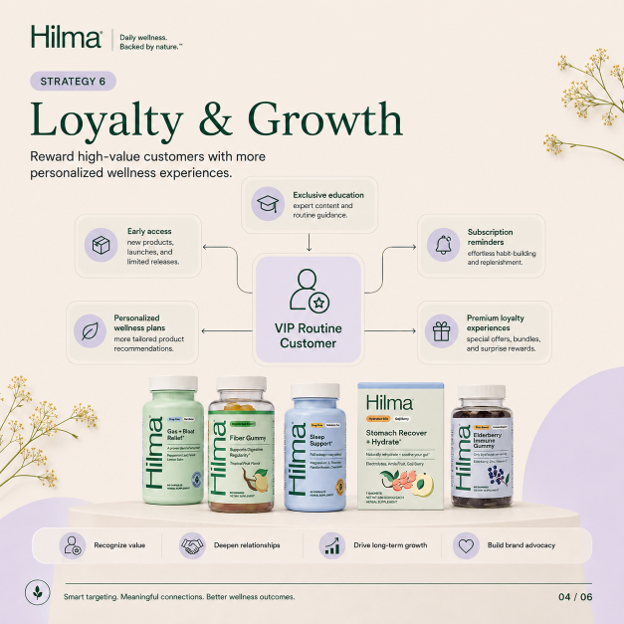
VIP Customer | High spend or high purchase frequency. | Early access, exclusive bundles, premium treatment. |
Replenishment Due | Product cycle indicates likely restock need. | Reorder or subscription reminder. |
Bloat Relief Seeker | Browsed or bought Gas + Bloat Relief. | Bloat education + Debloat + Digest Bundle. |
Dairy/Gluten Meal Support Buyer | Bought Digestive Enzymes. | Meal support, travel dining, trigger-food guidance. |
Daily Gut Routine Buyer | Bought fiber or probiotic products. | Habit building, subscription, replenishment. |
Parent / Hilma Kids Buyer | Bought kids’ digestive products. | Parent education, kids’ routine, refill reminders. |
Travel Buyer | Bought Travel Essentials or travel-tagged products. | Seasonal travel campaigns and restock reminders. |
Sleep/Tension Buyer | Bought Sleep Support or Tension Relief. | Night routine + stress support cross-sell. |
Seasonal Buyer | Bought Pollen Defense or immune products. | Seasonal reminders and pre-season campaigns. |
Bundle Buyer | Purchased bundle or used Build Your Own Bundle. | Ecosystem expansion and subscription. |
Discount-Only Buyer | Purchases mostly with promos. | Controlled promo strategy. |
Full-Price Buyer | Purchases without discounts. | Premium education, not over-discounted. |
Lapsed Buyer | No purchase in category-specific period. | Winback. |
Newsletter Engaged | Opens/clicks but has not been purchased. | Meta retargeting + conversion emails. |
SMS Engaged | Clicks SMS links. | High-urgency reminders and reorder CTAs. |
Behavioral Recommendation Logic
Strategy 1 — Symptom Affinity Expansion
Strategy Overview
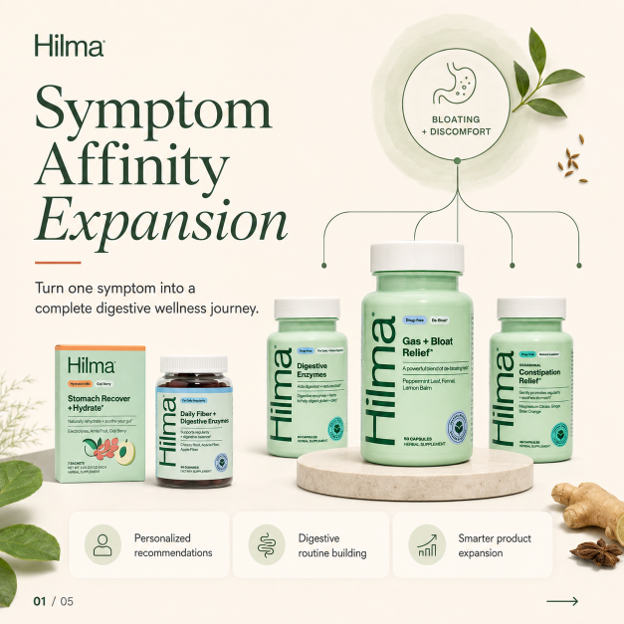
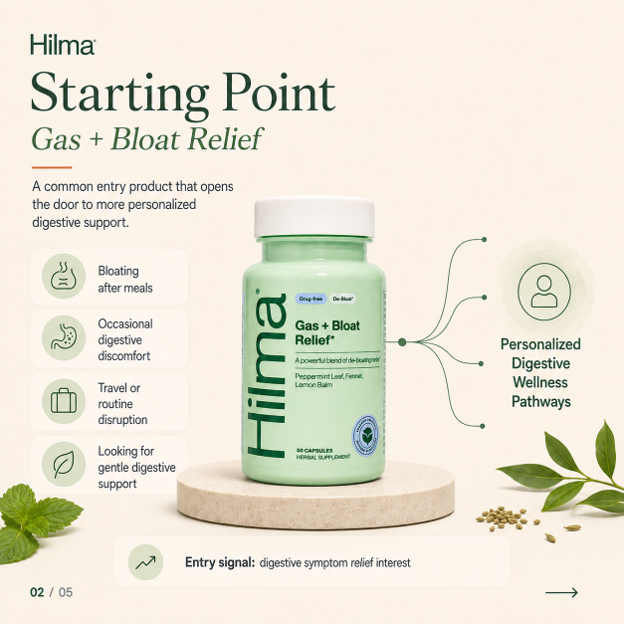
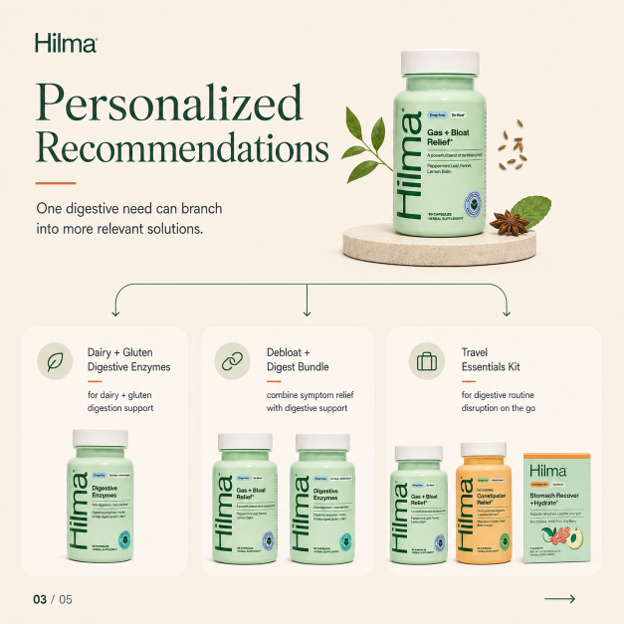
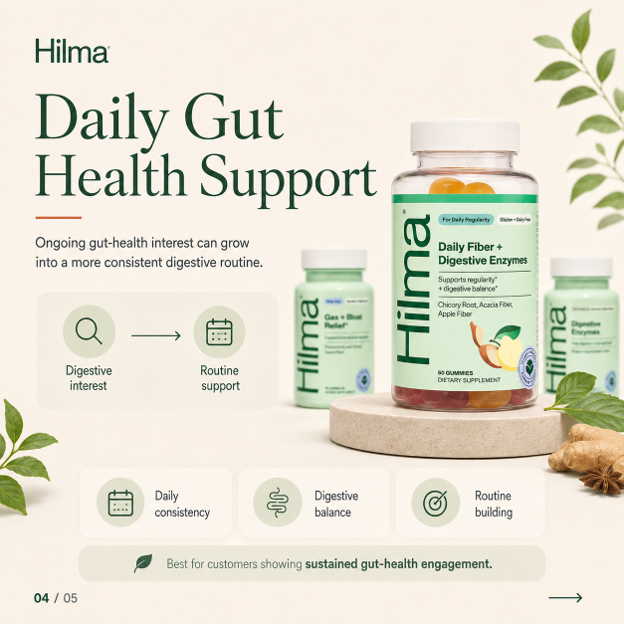
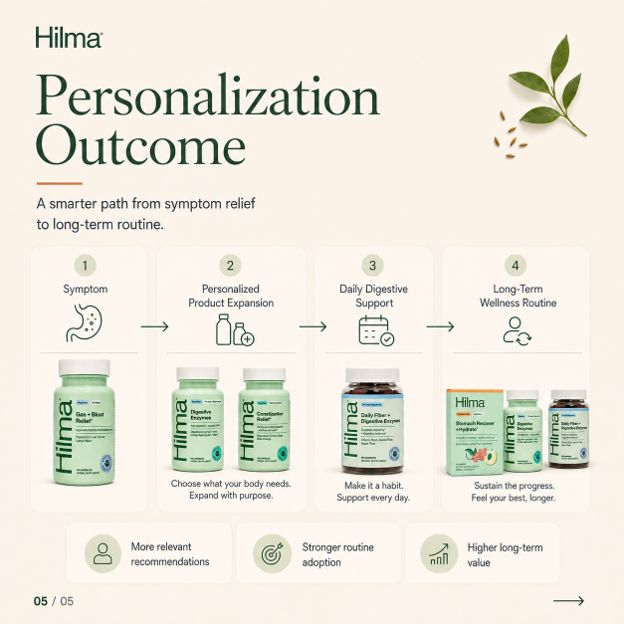
If a customer buys Gas + Bloat Relief, the system should recommend:
- Dairy + Gluten Digestive Enzymes
- Debloat + Digest Bundle
- Travel Essentials Kit
- Daily Fiber + Digestive Enzymes if the customer shows daily gut-health interest
Reason:
A person looking for bloat relief may also need meal support, daily digestion support, travel support, or bundle-based digestive coverage.
Strategy 2 — Daily Routine Expansion Logic
Strategy Overview
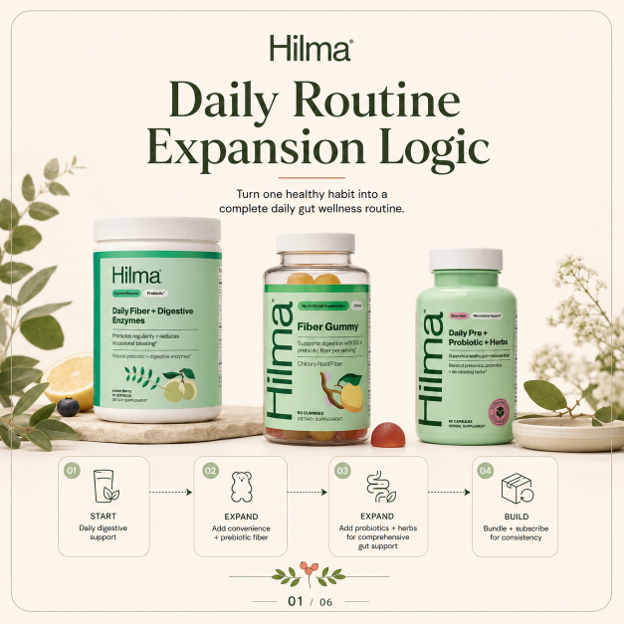
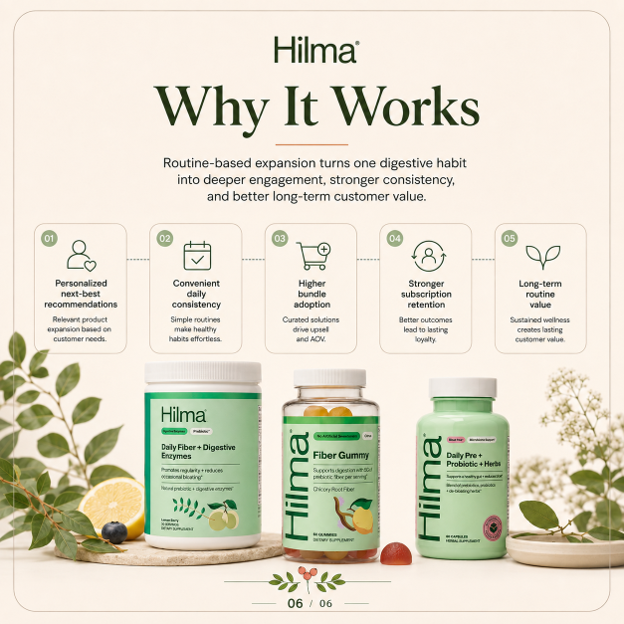
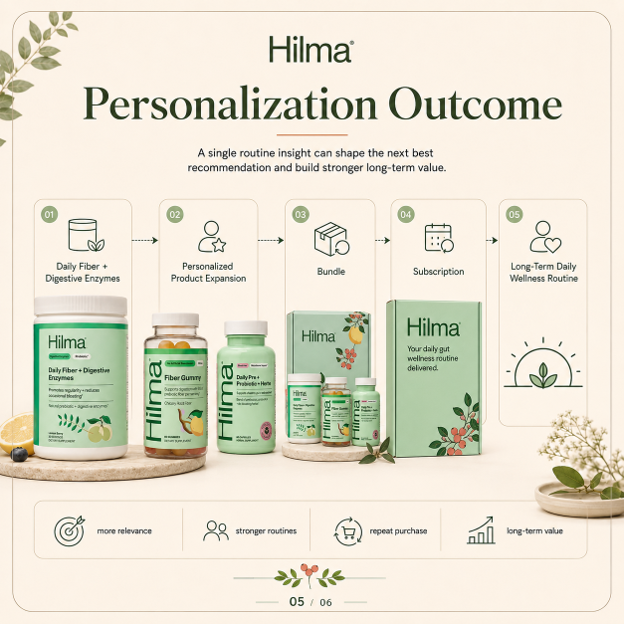
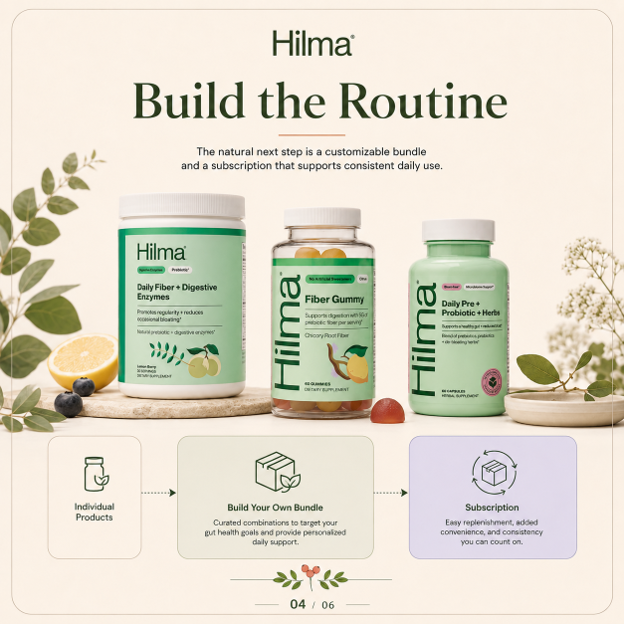
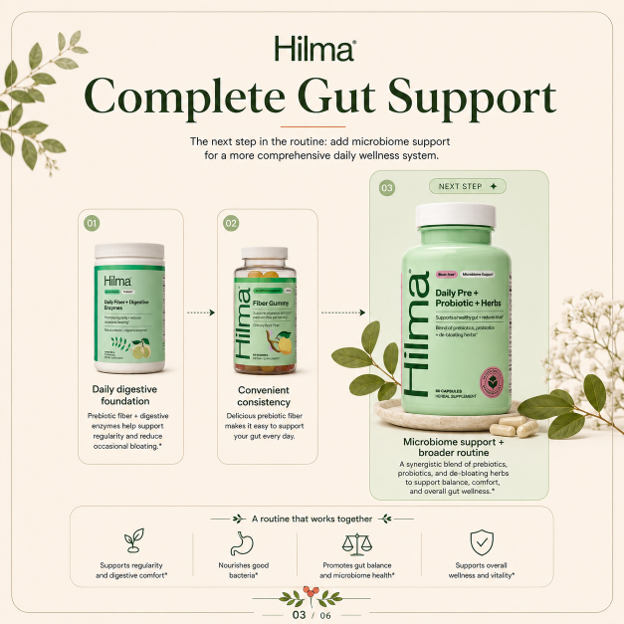
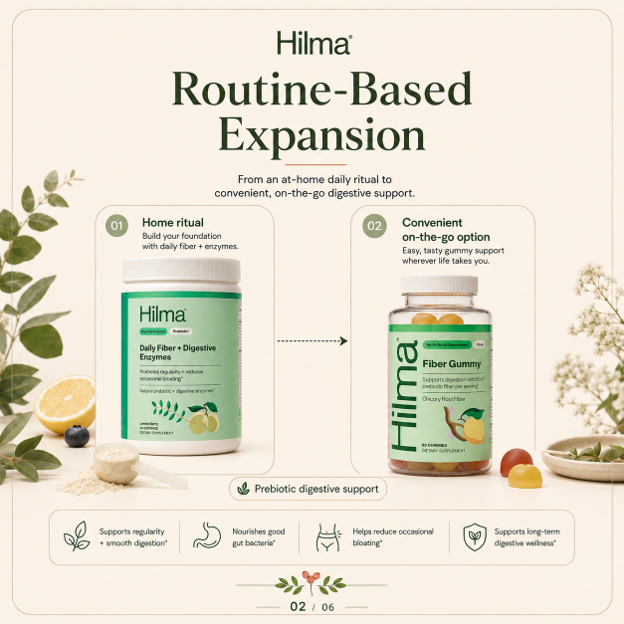
If a customer buys Daily Fiber + Digestive Enzymes Powder, the system should introduce:
- Fiber Gummy for convenience
- Daily Pre + Probiotic + Herbs for microbiome support
- Build Your Own Bundle for full gut routine
- Subscription for consistent daily use
Reason:
Daily fiber shoppers are routine-based. They are stronger candidates for subscription, replenishment, and cross-sell than acute-use remedy buyers.
Strategy 3 — Parent Lifecycle Logic
Strategy Overview
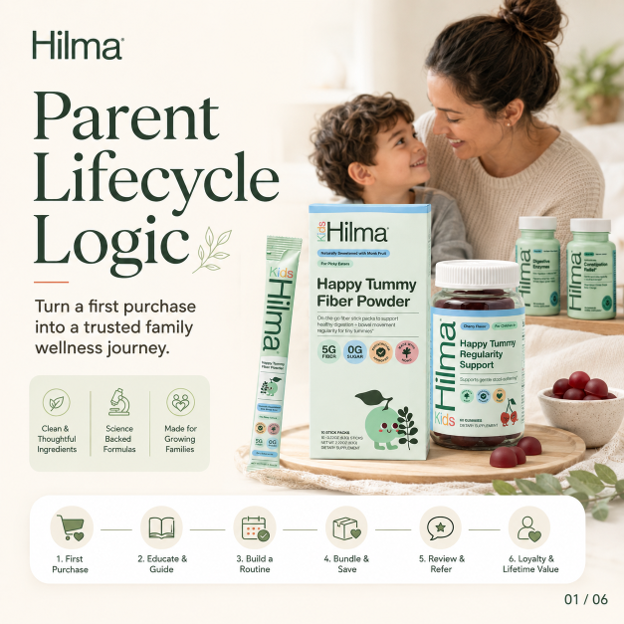
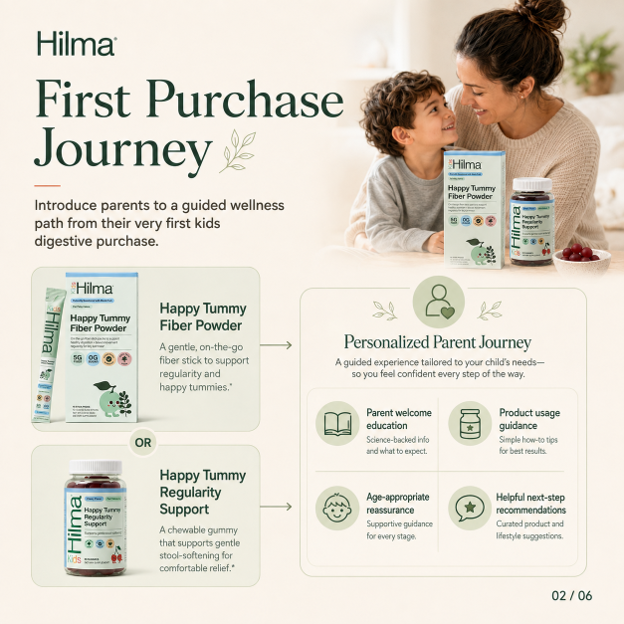
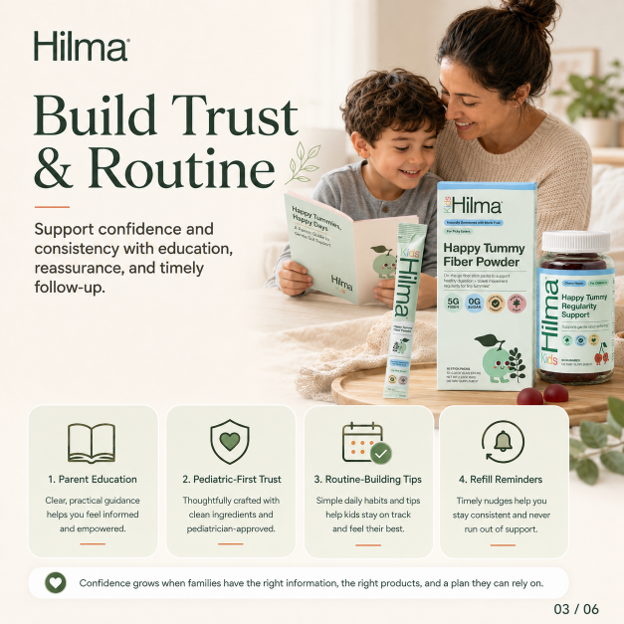
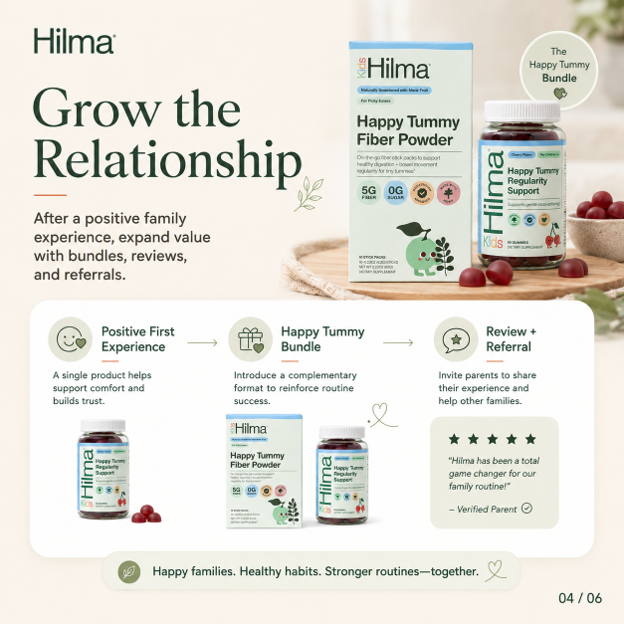
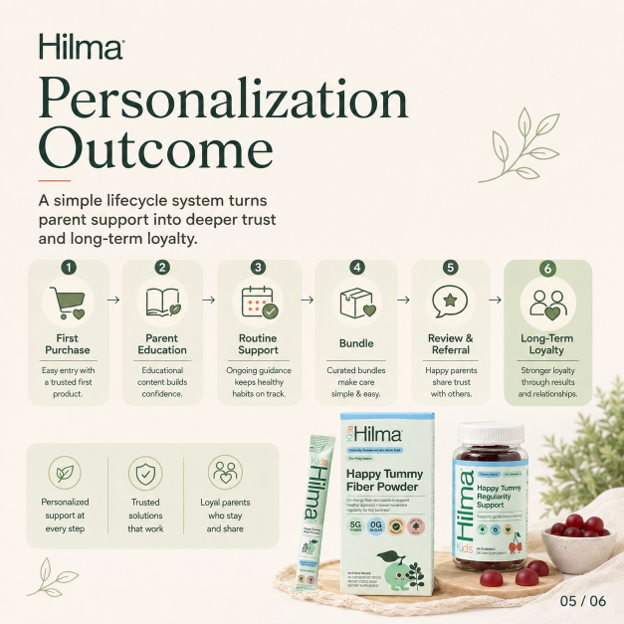
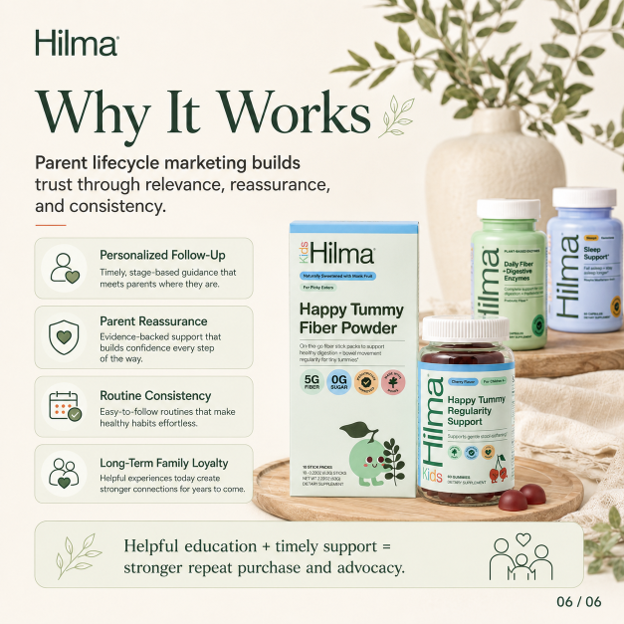
If a customer buys Happy Tummy Fiber Powder or Happy Tummy Regularity Support, the system should introduce:
- parent education
- pediatric formulation trust
- kids’ routine-building content
- refill reminders
- Happy Tummy Bundle
- review/referral after positive experience
Reason:
Hilma Kids customers are parents. The buyer needs reassurance, education, and consistency reminders more than a typical adult remedy shopper.
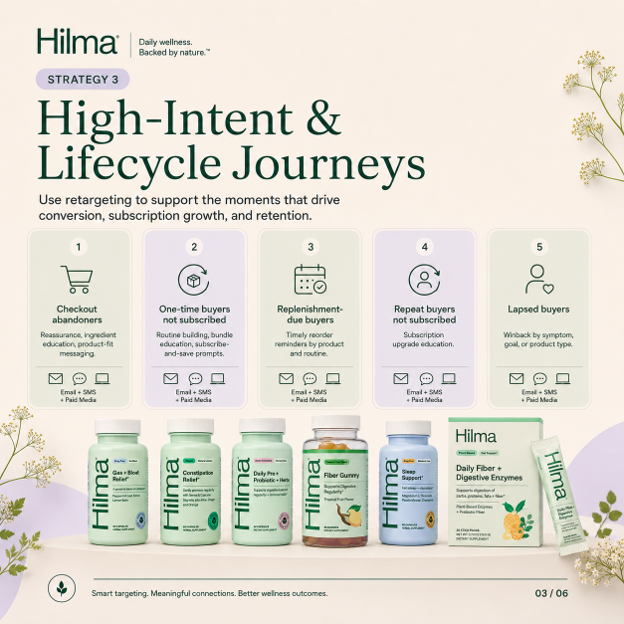
Strategy 4 — Subscription Conversion Architecture
Strategy Overview
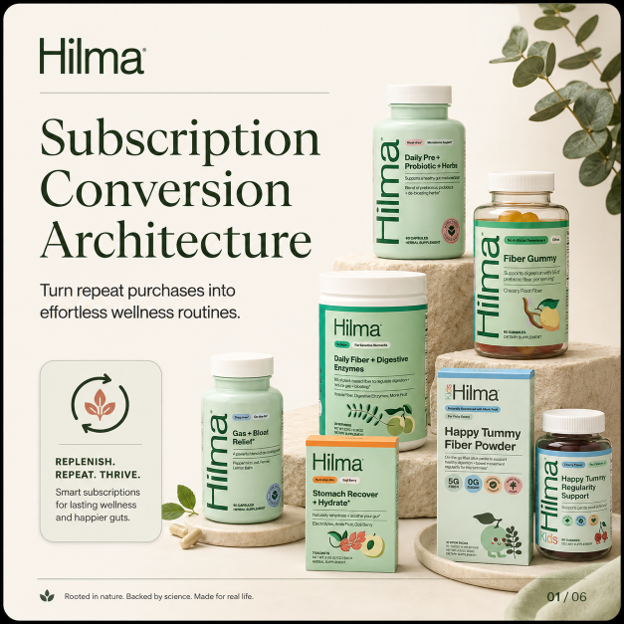
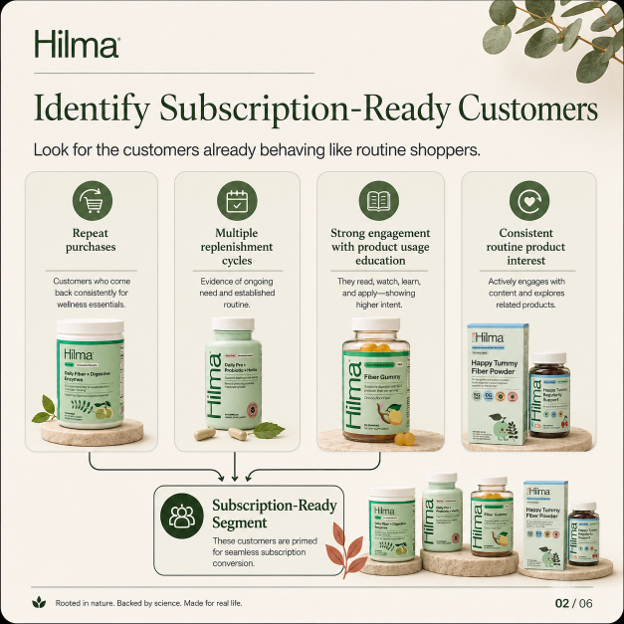
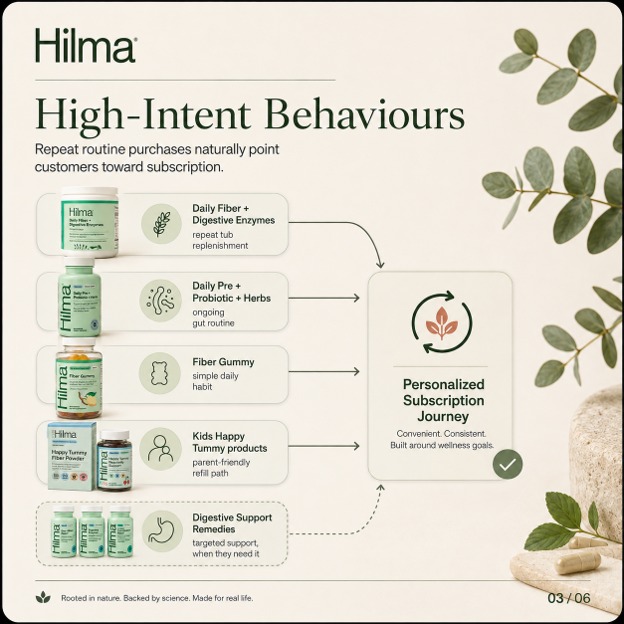
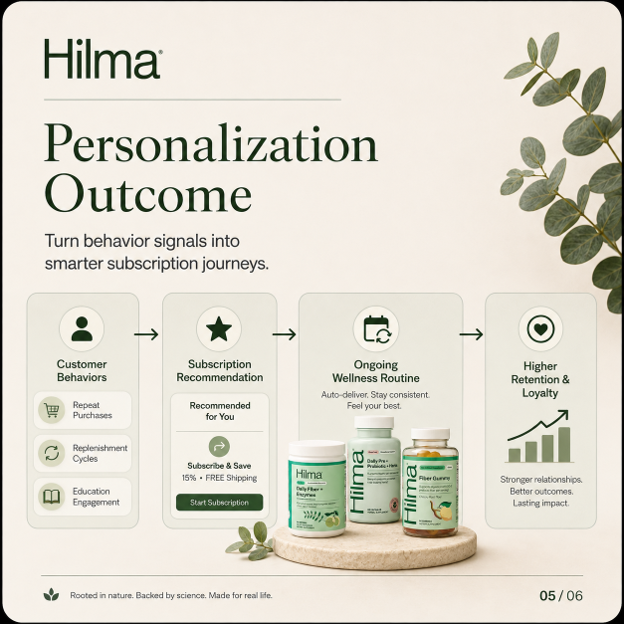
Customers showing:
- repeat purchase behavior
- multiple replenishment cycles
- high engagement with usage education
- repeated purchases of the same product category
- interest in daily fiber, probiotics, gummies, or kids’ routine products
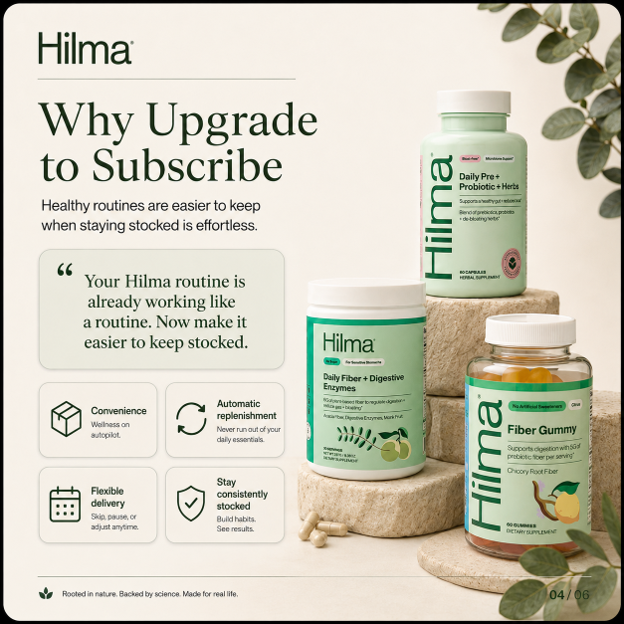
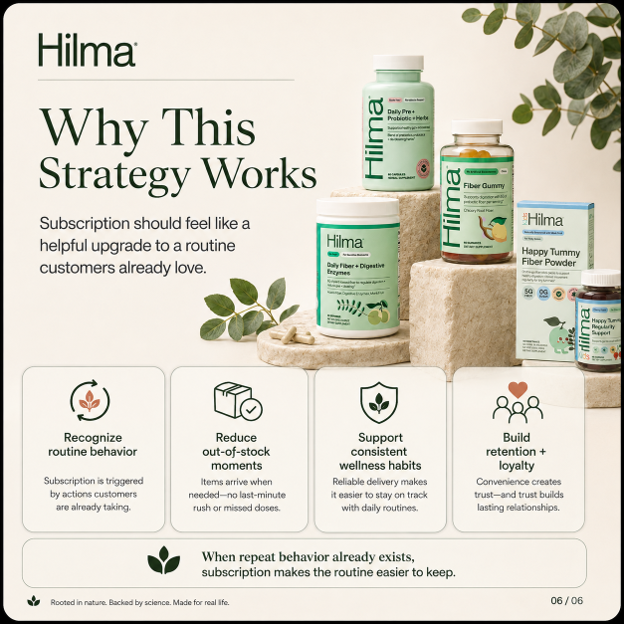
should automatically enter subscription upgrade flows.
The core message should be:
Your Hilma routine is already working like a routine. Now make it easier to keep stocked.
Strategy 5 — Content-to-Commerce Logic
Strategy Overview
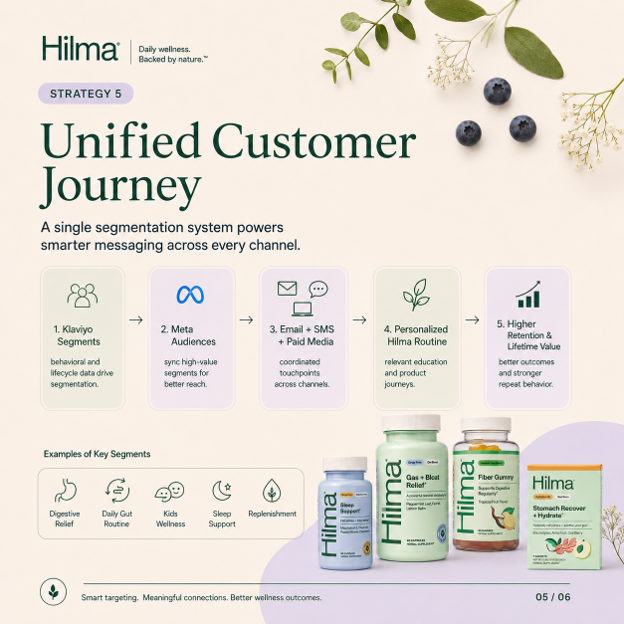
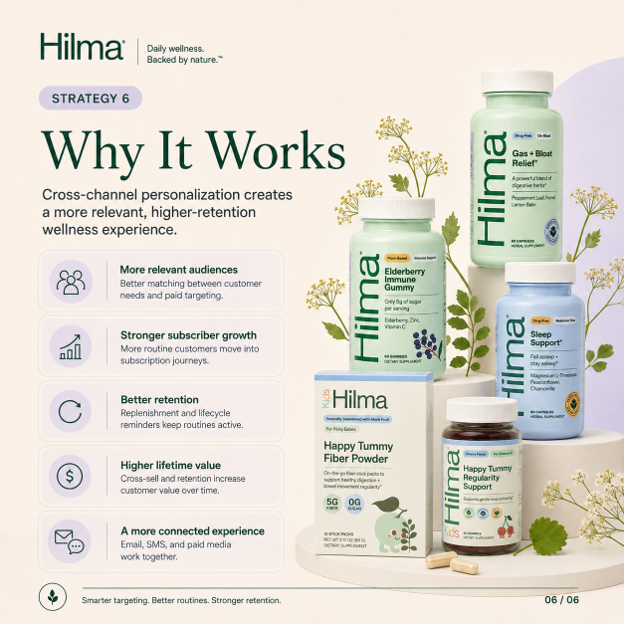
Hilma’s educational content should become a revenue trigger.
Content Interest | Follow-Up Flow |
Bloating content | Gas + Bloat Relief nurture. |
Travel digestion content | Travel Essentials Kit + Digestive Enzymes flow. |
GLP-1 constipation content | Fiber + regularity support flow. |
High-fiber recipes | Daily Fiber product flow. |
Kids’ fiber articles | Hilma Kids parent nurture. |
Sleep articles | Sleep Support flow. |
Tension articles | Tension Relief flow. |
Seasonal sinus content | Pollen Defense flow. |
The strategy is to turn content behavior into segmented commerce intent.
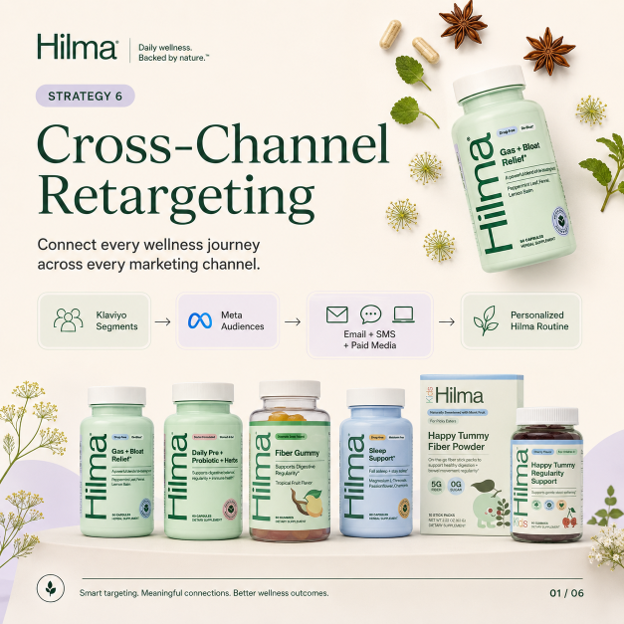
Strategy 6 — Cross-Channel Retargeting
Strategy Overview
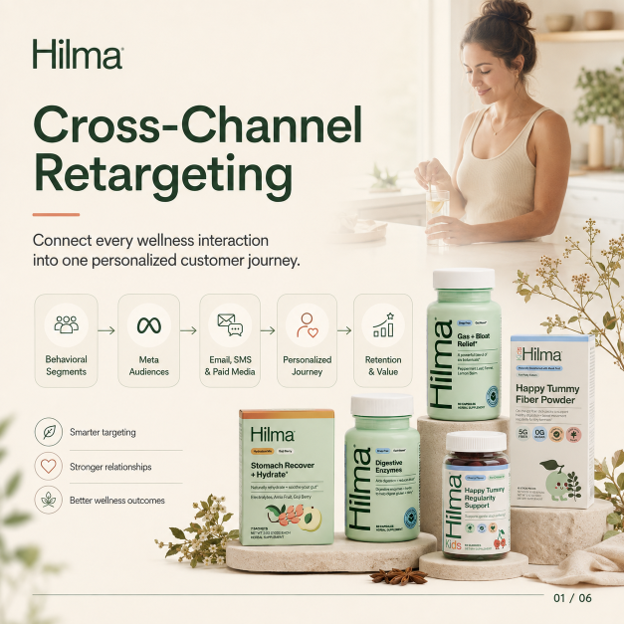
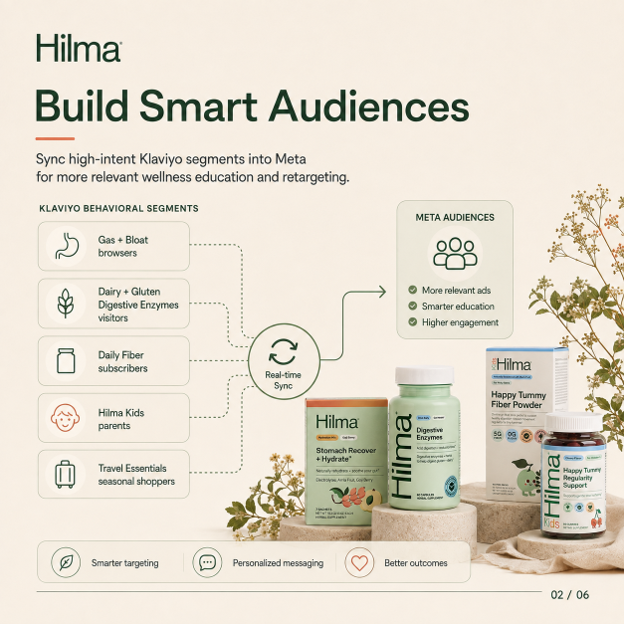
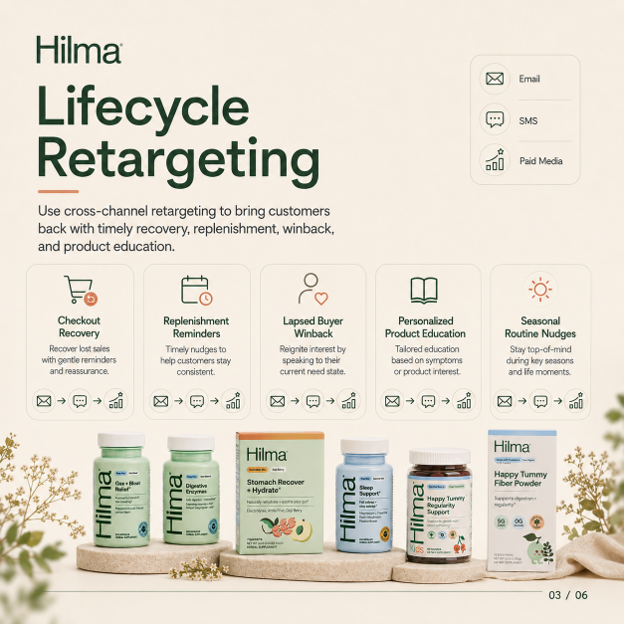
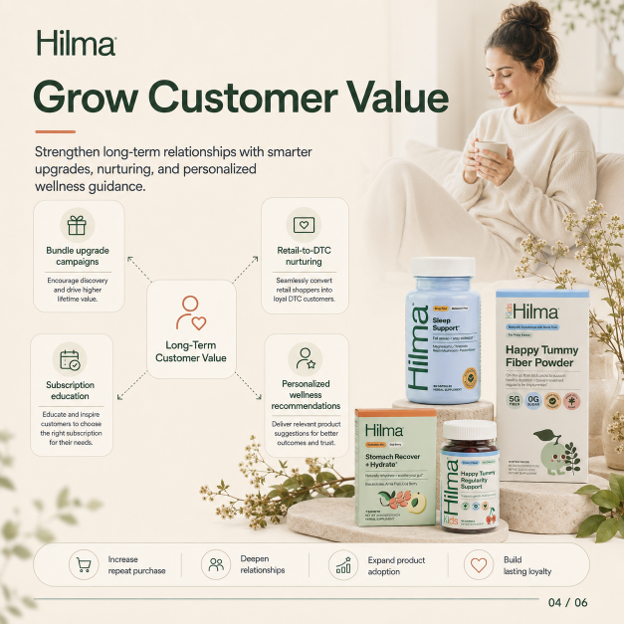
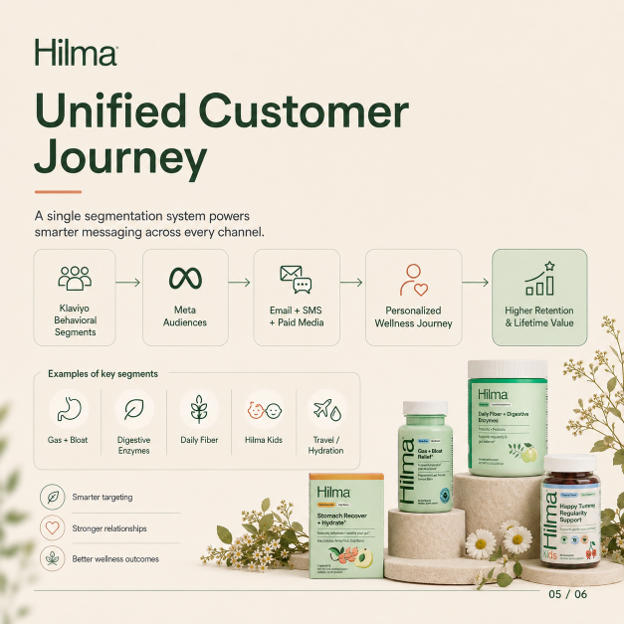
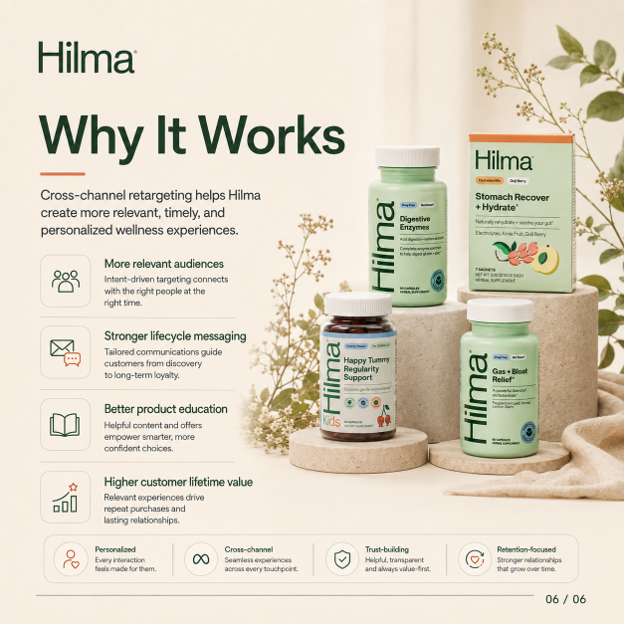
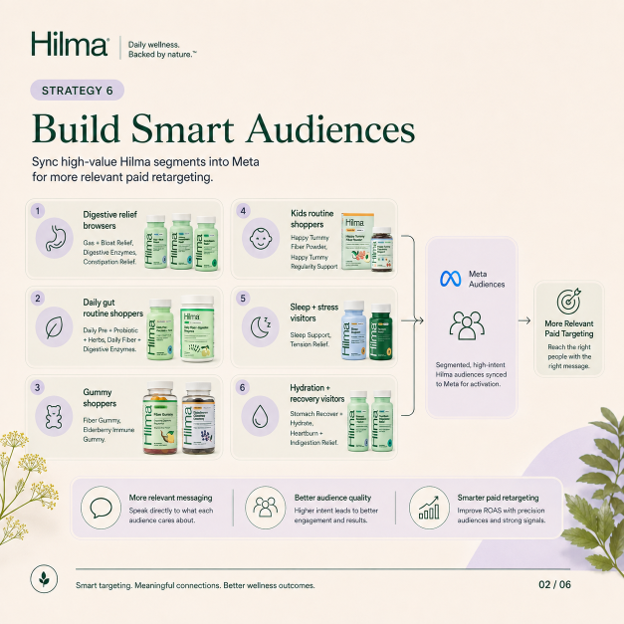
Behavioral segments from Klaviyo should sync with Meta Ads.
This allows Hilma to run:
- Gas + Bloat browse retargeting
- Dairy + Gluten Digestive Enzymes meal-support retargeting
- Daily Fiber subscription retargeting
- Hilma Kids parent retargeting
- Travel Essentials seasonal retargeting
- Checkout recovery ads
- Replenishment reminder ads
- Lapsed buyer winback ads
- Bundle upgrade ads
- Retail-to-DTC nurturing ads
Campaign Strategy
Hilma should send 1–3 campaigns per week, but not to the entire list every time.
The campaign calendar must be segmented by symptom, product category, subscription status, purchase history, and engagement level.
Campaign Type | Audience | Purpose |
Educational email | Engaged non-buyers and broad engaged list | Build trust around clean-label, doctor-formulated remedies. |
Product spotlight | Product-interest segment | Move specific symptom groups toward purchase. |
Replenishment campaign | Past buyers due soon | Drive timely reorder or subscription. |
Subscription campaign | Repeat non-subscribers | Convert routine users into subscribers. |
Cross-sell campaign | Product-specific buyers | Increase AOV through relevant product pairings. |
VIP campaign | High-value customers | Offer early access, exclusive bundles, or product previews. |
Referral campaign | Repeat buyers, subscribers, happy customers | Acquire new customers through advocacy. |
Promo campaign | Discount-sensitive segment | Drive controlled conversion without training full list to wait for discounts. |
Content campaign | Blog readers and education seekers | Turn education into symptom-specific product interest. |
New product / collection campaign | Relevant category segments | Launch new products to customers most likely to care. |
Example monthly campaign calendar
Week | Campaign 1 | Campaign 2 | Campaign 3 |
Week 1 | Education: “Why bloat happens after meals” | Product spotlight: Gas + Bloat Relief | Replenishment: Digestive support restock reminder |
Week 2 | Routine: “Your daily gut support checklist” | Subscription: “Never run out of your daily fiber” | Bundle: Debloat + Digest system |
Week 3 | Travel: “Pack your clean remedy kit” | Product spotlight: Digestive Enzymes | Referral: Share Hilma with a friend |
Week 4 | Kids: “Fiber support for tiny tummies” | Seasonal: Pollen Defense reminder | Winback: “Restock your remedy cabinet” |
Campaign suppression rules
- Someone in checkout abandonment should not receive a general promo at the same time.
- Someone due for replenishment should receive reorder messaging, not a random product launch.
- A subscriber should not receive “subscribe now” messaging.
- A recent purchaser should not receive first-purchase discount messaging.
- A Hilma Kids buyer should receive parent-specific messaging, not generic adult digestive copy.
- A full-price buyer should not be overexposed to discounts.
- A discount-sensitive buyer should receive controlled promotional logic.
- A lapsed buyer should not receive the same message as a hot engaged browser.
- Someone reading sleep content should not be pushed into bloat products unless behavior supports it.
Meta-Based Newsletter Subscription Growth Strategy
Hilma should use Meta Ads not only for immediate sales, but also for low-friction owned audience growth.
The goal:
Use Meta Ads to turn cold and warm audiences into email/SMS subscribers by offering a personalized Hilma nutrition plan and first-subscription incentive delivered by email.
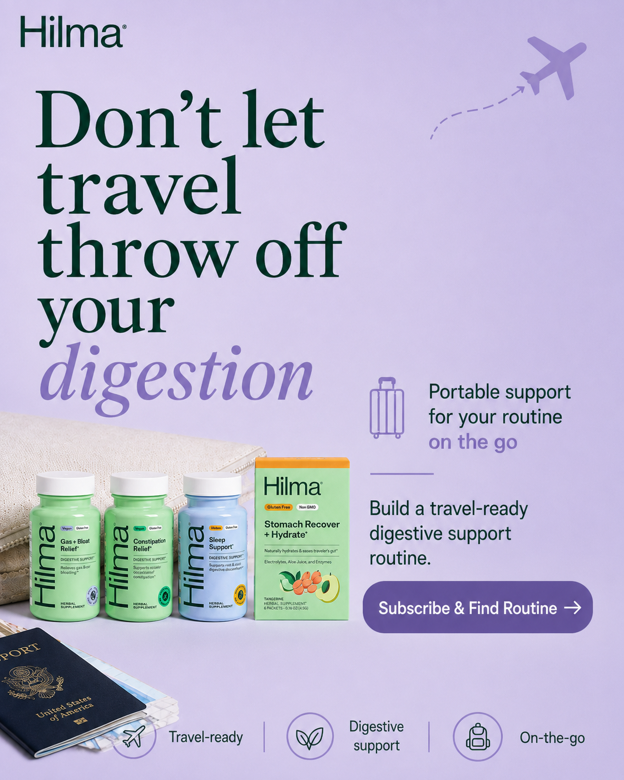
The strongest Meta-to-email funnel is:
Find Your Natural Remedy Routine
This works better than a generic discount because Hilma’s customers shop by symptom.
Campaign Element | Strategy |
Audience | Digestive health shoppers, clean-label wellness shoppers, parents, travelers, sleep support shoppers, seasonal sinus support shoppers, retail-aware audiences. |
Offer | Personalized Hilma remedy routine + optional first-order incentive. |
Landing Page | Symptom quiz with result-based product recommendation. |
Form Fields | Email, SMS, primary symptom, shopping for self/child, fast relief vs daily support, dairy/gluten trigger, travel intent. |
Follow-Up Flow | Quiz result flow routed by symptom. |
Retargeting Layer | Klaviyo segment syncs to Meta by product interest and quiz result. |
Ad angle examples
Angle | Example Hook |
Bloat | “Bloated after meals? Find your clean remedy routine.” |
Dairy/gluten | “Love dairy or gluten but hate the discomfort? Start here.” |
Daily gut health | “Need a daily gut routine that feels easier to stick with?” |
Kids | “Tiny tummy troubles? Find the Hilma Kids routine.” |
Travel | “Don’t let travel throw off your digestion.” |
Sleep | “Build a cleaner night routine.” |
Seasonal | “Seasonal sinus support, without the drowsy feeling.” |
Not every Meta visitor is ready to buy immediately.
But if they are willing to identify their symptoms and receive a personalized product routine, Hilma can move them into a high-trust nurture journey through Klaviyo and SMS.
Meta Ads Retargeting Strategy
Klaviyo segments should sync with Meta audiences.
Klaviyo Segment | Meta Retargeting Angle |
Email subscribers, no purchase | First-purchase education around selected symptoms. |
Quiz completers, no purchase | Result-specific product recommendation. |
Gas + Bloat browse abandoners | Product-specific bloat relief retargeting. |
Digestive Enzymes browse abandoners | Dairy/gluten meal-support retargeting. |
Daily Fiber browsers | Daily gut routine and subscription ads. |
Hilma Kids browsers | Parent trust and kids’ tummy support ads. |
Checkout abandoners | Cart recovery ads with product-specific reassurance. |
Past buyers due for replenishment | Reorder reminder ads. |
Repeat buyers, no subscription | Subscribe-and-save convenience ads. |
Bundle buyers | Build Your Own Bundle and remedy cabinet ads. |
VIP customers | Early access, new product, or bundle ads. |
Lapsed buyers | Winback and “restock your remedy cabinet” ads. |
Seasonal buyers | Pollen Defense or travel digestion ads before relevant seasonal windows. |
SMS subscribers | High-urgency reorder or checkout reminder ads. |
Retail registrants | DTC reorder, subscription, and bundle education. |
This creates a connected lifecycle system where email, SMS, and paid media work together instead of operating separately.
Referral Program Strategy
Referral should be built into the customer journey.
Person | Incentive |
Friend | 15% off first Hilma order or starter routine. |
Referrer | 15% off next order, store credit, or bundle credit. |
Best referral triggers
Trigger | Why It Works |
After second purchase | Customers have shown product confidence. |
After positive review | High satisfaction moment. |
After subscription signup | Customers believe in the product as a routine. |
After VIP qualification | Best customers often refer to better-fit customers. |
After reorder | Strong habit signal. |
After Hilma Kids repeat purchase | Parents may naturally recommend family wellness products to other parents. |
After UGC submission | Customers are already advocating publicly. |
Referral message
Know someone building a cleaner remedy cabinet? Share Hilma and help them find natural support for digestion, bloat, sleep, tension, seasonal sinus support, or kids’ tummy needs. They get rewarded on their first order, and you get rewarded for sharing what works for your routine.
Expected Revenue Impact
Based on the lifecycle system outlined above, we believe Hilma could unlock up to 40% additional lifecycle-driven revenue through retention optimization, symptom-based personalization, retail-to-DTC capture, improved repeat-purchase behavior, smarter segmentation, product-specific automation, subscription conversion, replenishment timing, cross-sell logic, referral acquisition, and email/SMS/paid media alignment.
Growth Lever | Potential Impact |
Welcome flow improvement | More first-time purchases through symptom-specific education and quiz routing. |
Browse + checkout recovery | More recovered revenue from product-specific reminders and objection handling. |
Post-purchase education | Higher customer confidence, better product usage, and stronger second-purchase behavior. |
Replenishment automation | More timely repeat purchases before customers run out or forget to restock. |
Subscription conversion | Higher recurring revenue from daily-use and repeat-use products. |
Cross-sell and bundles | Higher AOV through symptom-overlap recommendations and Build Your Own Bundle logic. |
Retail-to-DTC capture | More owned CRM customers from Walmart, Target, Walgreens, Amazon, and retail discovery. |
Referral program | Lower-cost acquisition from satisfied buyers, subscribers, parents, and VIP customers. |
Winback campaigns | Recovered lapsed buyers by reconnecting them to their original symptom or product need. |
Meta retargeting | Better paid media efficiency through Klaviyo-to-Meta audience sync. |
Sunset suppression | Better deliverability, cleaner list quality, and stronger campaign engagement. |
Core KPIs to track
KPI | Why It Matters |
Email revenue percentage | Measures total lifecycle contribution. |
Flow revenue | Measures automation performance. |
Campaign revenue | Measures ongoing list monetization. |
First purchase conversion rate | Measures welcome and quiz performance. |
Quiz completion rate | Measures lead capture quality. |
Quiz-to-purchase rate | Measures symptom routing effectiveness. |
Repeat purchase rate | Measures retention. |
Time between purchases | Measures replenishment efficiency. |
Subscription conversion rate | Measures recurring revenue growth. |
Subscriber churn | Measures subscription health. |
Bundle attach rate | Measures AOV expansion. |
Retail registration rate | Measures retail-to-DTC capture. |
AOV | Measures cross-sell and bundle impact. |
LTV | Measures total lifecycle success. |
Unsubscribe/spam rate | Measures list health. |
Meta retargeting ROAS | Measures cross-channel efficiency. |
90-Day Execution Roadmap
Phase 1 — Data & Foundation: Days 1–15
- Audit Klaviyo account structure
- Audit Shopify or commerce event tracking
- Map Hilma product categories to symptoms
- Map SKUs, serving counts, product formats, bundles, and subscription options
- Build customer property architecture
- Build key lifecycle segments
- Define suppression rules
- Build popup strategy
- Build quiz logic
- Build retail-to-DTC QR capture concept
- Prepare email/SMS compliance language
- Define supplement-compliant claim guidelines
Phase 2 — Core Flow Buildout: Days 16–45
- Symptom-based welcome flow
- Quiz result flow
- Product-specific browse abandonment
- Cart abandonment
- Checkout abandonment
- First purchase education flow
- Product usage flow
- Replenishment flow
- One-time buyer to subscription flow
- Bundle upgrade flow
- Hilma Kids parent education flow
- Review/referral flow
- Winback flow
- Sunset flow
Phase 3 — Campaign & Retargeting System: Days 46–75
- Build monthly campaign calendar
- Build symptom-specific campaign templates
- Build retail-to-DTC nurture campaigns
- Build product-specific campaign blocks
- Sync Klaviyo segments to Meta
- Launch Meta retargeting campaigns
- Launch quiz-based Meta lead funnel
- Build subscriber vs non-subscriber content logic
- Build VIP and bundle buyer campaign logic
- Launch referral promotion
- Launch FSA/HSA education campaign where relevant
- Launch seasonal travel and pollen campaigns
Phase 4 — Optimization: Days 76–90
- A/B test quiz vs discount lead capture
- A/B test popup timing and offers
- A/B test symptom-specific subject lines
- Test single-product vs bundle recommendation logic
- Test replenishment timing by product category
- Test subscription messaging by product type
- Review flow revenue
- Review campaign revenue
- Review repeat purchase rate
- Review subscription conversion rate
- Review Meta retargeting ROAS
- Optimize send frequency
- Build reporting dashboard
Conclusion
Hilma already has the foundation of a strong modern wellness brand.
It has clear positioning, science-backed trust, clean-label credibility, major retail expansion, a focused digestive health portfolio, subscription options, bundles, educational content, and a product ecosystem built around real customer concerns.
But for a brand like Hilma, the biggest opportunity is not only acquisition.
The bigger opportunity is lifecycle infrastructure.
If inknbox managed Hilma’s lifecycle marketing, we would not simply send more emails. We would build a complete retention engine powered by Klaviyo, commerce data, customer behavior, symptom-based segmentation, product tags, replenishment timing, subscription logic, SMS, referral, retail-to-DTC capture, and Meta retargeting audiences.
The result would be a fully connected system designed to:
- convert more subscribers into first-time customers
- turn symptom quiz traffic into product-specific nurture journeys
- educate buyers after purchase
- increase second and third purchases
- improve replenishment timing
- grow subscription adoption
- increase AOV through bundles and cross-sells
- capture retail buyers into owned CRM
- recover lapsed customers
- improve paid retargeting efficiency
- protect deliverability
- and unlock up to 40% additional lifecycle-driven revenue
This is the real power of lifecycle marketing.
Not more random campaigns. Not more generic discounts.
But a complete customer journey that turns attention into purchase, purchase into confidence, confidence into routine, routine into repeat revenue, and repeat revenue into long-term customer value.