What If inknbox Rebuilt CUUP’s Fit-First Lifecycle Engine to Unlock Up to 40% More Revenue?
- Lifecycle Marketing
- 18 Minutes
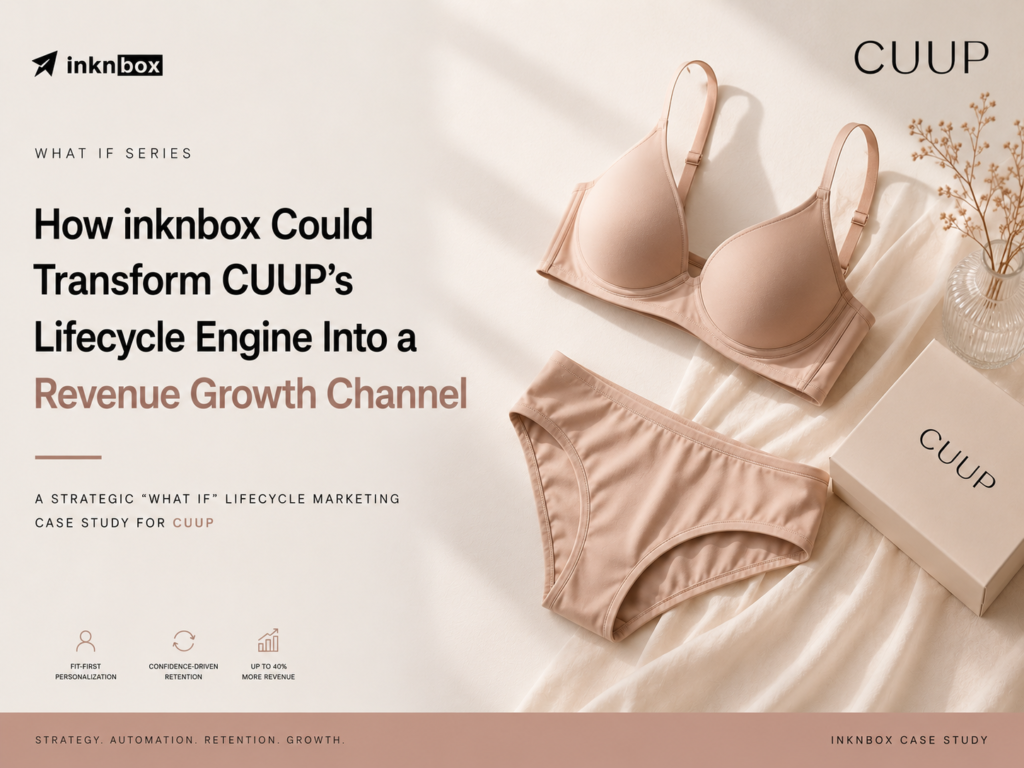
A strategic “What If” lifecycle marketing case study for CUUP
This is an independent strategic case study created by inknbox. We do not claim to manage CUUP, and this case study is not intended to criticize the brand, its internal team, FullBeauty Brands, or any current agency partner.
Instead, this is part of our “What If” series, where we analyze established eCommerce and DTC brands and show how we would structure their lifecycle marketing system if we were responsible for retention, repeat purchases, customer confidence, category expansion, and long-term customer value.
CUUP already has a strong brand foundation. Its public product ecosystem includes bras, underwear, bralettes, swimwear, lounge pieces, packs, bundles, and sale collections, while its public messaging positions the brand around minimalist intimates, unlined support, natural shape, and inclusive sizing.
The question is not whether CUUP is already a strong modern intimates brand.
The real question is:
What if CUUP’s email, SMS, fit education, product-specific abandonment, post-purchase support, matching-set cross-sell, referral, loyalty, and paid retargeting systems were connected into one fit-first lifecycle revenue engine?
That is where we believe the brand could unlock up to 40% additional lifecycle-driven revenue through better segmentation, behavioral automation, size-confidence messaging, product-specific routing, matching-set recommendations, bundle logic, category expansion, and retention-focused campaigns.
For an intimates brand like CUUP, the biggest lifecycle opportunity is not only sending more campaigns. It is building a system that helps shoppers feel confident about fit before they buy, supported after they order, and motivated to return for the next piece in their wardrobe.
Overview
CUUP operates in a highly valuable category for lifecycle marketing because intimates shoppers do not make purchase decisions based on product style alone. A customer shopping for bras, underwear, swimwear, or lounge pieces is also thinking about fit, comfort, support, coverage, body shape, size accuracy, return flexibility, and whether the product will feel right after it arrives.
That makes CUUP a strong candidate for a lifecycle marketing system built around fit confidence. CUUP’s opportunity is driven by helping customers overcome hesitation before the first purchase and then expanding them into repeat purchases through matching sets, packs, swim, lounge, and seasonal wardrobe refreshes.
The customer journey for CUUP is not only: See product → like product → buy product
It is more complex: Discover style → understand fit → trust support → choose size → complete purchase → try on → feel confident → complete the set → return for more
That means the email and SMS system should not operate as a basic promotional channel. It should act as a guided shopping assistant that helps customers choose the right size, understand the right silhouette, feel reassured about the buying decision, and come back for the next product category.
2. CUUP’s Background
| Category | Details |
|---|---|
| Brand Positioning | Minimalist, size-inclusive DTC intimates brand |
| Core Product Type | Bras, underwear, swim, lounge, bundles |
| Main Product Categories | Unlined bras, panties, bralettes, swimwear, lounge, packs |
| Brand Communication Style | Minimal, modern, fit-led, body-confident |
| Customer Behavior Type | Fit-sensitive apparel shoppers with repeat purchase potential |
| Core Revenue Opportunity | First-purchase confidence, matching set expansion, bundles, repeat purchases |
| Audience Characteristics | Women 20–45, fashion-conscious, comfort-focused, online-first |
| Ideal Automation Structure | Fit-first lifecycle architecture with product/category routing |
3. The Core Growth Hypothesis
Our core growth hypothesis is that CUUP has strong lifecycle revenue potential because intimates are closely tied to fit, comfort, confidence, and repeat purchase behavior.
A customer may start with one bra, then return for another color, add matching panties, explore bralettes, try swimwear, or reorder once they find their preferred fit. This makes CUUP ideal for a product-specific lifecycle system built around customer behavior, size preference, product interest, and purchase history.
Instead of sending generic emails, Klaviyo would route each customer into a specific journey based on what they viewed, added to cart, purchased, or repeatedly engaged with.
| Customer Behavior | Lifecycle Strategy |
|---|---|
| Viewed a specific CUUP bra but did not add to cart | Send product-specific emails about fit, support, comfort, reviews, and size guidance |
| Started checkout but did not complete purchase | Send checkout recovery emails focused on fit confidence, reassurance, returns/exchanges, and easy checkout |
| Purchased one bra style | Send post-purchase emails about fit, care, styling, and matching panties |
| Purchased panties only | Introduce matching bras, bralettes, or bundle options |
| Purchased a bra and matching bottom | Move customer into set-building, color expansion, and collection campaigns |
| Purchased multiple times | Move customer into VIP, early access, loyalty, and new collection campaigns |
| Has not purchased again after a defined period | Send refresh, replacement, or winback messaging |
| Engaged with emails but did not purchase | Retarget through email, SMS, and Meta custom audiences |
With this structure, CUUP’s lifecycle marketing would become more personalized and revenue-focused. Every email, SMS, and retargeting audience would be connected to the customer’s actual product interest, size preference, and purchase stage.
This system could help CUUP unlock up to 40% additional lifecycle-driven revenue by improving first-purchase conversion, checkout recovery, matching-set cross-sells, repeat purchases, category expansion, VIP retention, and long-term customer lifetime value.
4. Priority-Based Tools & Automation Infrastructure
To build CUUP’s lifecycle revenue system, the core infrastructure would be centered around Klaviyo as the main email, SMS, automation, segmentation, and customer journey platform.
The system would connect customer behavior, product interest, size preference, purchase history, and engagement data into one lifecycle architecture. This would allow CUUP to send more relevant messages based on what each customer viewed, purchased, abandoned, or is most likely to buy next.
| Priority | Tool / Infrastructure | Purpose |
|---|---|---|
| Core System | Klaviyo | Email, SMS, flows, segmentation, campaign management, and lifecycle automation |
| Commerce Layer | eCommerce platform / Shopify-style product data | Product views, add-to-cart events, checkout activity, purchase history, SKU data, and customer profiles |
| Behavioral Logic Layer | Product and customer tagging architecture | Track product interest, bra style, size preference, color preference, category interest, and purchase behavior |
| Lead Capture Layer | Website popup + embedded forms | Capture email and SMS subscribers with first-purchase incentives and fit-based messaging |
| Fit & Preference Layer | Size, style, and product preference data | Personalize recommendations based on bra size, fit needs, product category, and preferred styles |
| Retention Layer | Post-purchase and replenishment logic | Trigger care education, matching-set recommendations, replacement reminders, and repeat purchase flows |
| Cross-Sell Layer | Dynamic product recommendation system | Recommend matching panties, new colors, bralettes, swimwear, bundles, and complementary styles |
| Analytics Layer | Klaviyo analytics + GA4/eCommerce reporting | Track flow revenue, campaign performance, repeat purchase rate, AOV, LTV, and subscription/retention growth |
| Paid Retargeting Layer | Meta Ads custom audiences | Retarget browsers, checkout abandoners, email subscribers, lapsed customers, and VIP buyers |
| Deliverability Layer | Sunset and suppression logic | Protect list health by removing unengaged subscribers and improving email performance |
This infrastructure would allow CUUP to move beyond basic email campaigns and build a smarter lifecycle system where every customer receives messaging based on their actual shopping behavior, product interest, size preference, and purchase stage.
5. Lifecycle Architecture Design
| Lifecycle Stage | Main Goal | CUUP Strategy |
|---|---|---|
| Acquisition | Capture new leads and first-party data | Popups, fit quiz, size guide capture, first-order offer |
| Activation | Convert subscribers and first-time buyers | Welcome flow, fit education, best sellers, silhouette guidance |
| Retention | Increase second purchase | Post-purchase fit check, care guide, matching set recommendations |
| Expansion | Increase LTV | Packs, bundles, swim, lounge, new color drops, VIP/rewards |
6. Lead Capture Strategy
CUUP’s lead capture strategy should focus on collecting high-quality first-party data, not just email addresses. Since intimates are highly personal and fit-driven, every signup point should help CUUP understand the customer’s size, style preference, product interest, and purchase intent.
The goal is to convert new visitors into email/SMS subscribers and then route them into the right Klaviyo journey based on what they are most likely to buy.
6.1 Website Popup Strategy
CUUP can use a timed or behavior-based popup to capture new visitors.
Offer example:
| Signup Action | Incentive |
|---|---|
| Email signup | 10% off first order |
| Email + SMS signup | Extra 5% off or early access to drops |
| Returning visitor | Product-specific reminder or fit-based recommendation |
| Exit-intent visitor | First-purchase incentive with fit support messaging |
The popup should not feel like a generic discount offer. It should connect with CUUP’s core value: fit, comfort, and confidence.
Example popup message:
Find your best fit with CUUP.
Join the list for 10% off your first order, fit guidance, new color drops, and early access to best-selling styles.
6.2 Fit & Preference Capture
After signup, CUUP should collect additional preference data through a short fit quiz or preference form.
Useful data points:
| Data Point | Why It Matters |
|---|---|
| Bra size | Personalizes product recommendations |
| Preferred style | Routes customers toward balconette, plunge, scoop, mesh, bralette, etc. |
| Support need | Helps separate comfort-first, support-first, and style-first buyers |
| Color preference | Supports color-drop and collection campaigns |
| Product interest | Identifies interest in bras, panties, bralettes, swimwear, or sets |
| Shopping goal | Helps personalize messaging around everyday wear, special occasion, work, travel, or lounge |
This data can be stored in Klaviyo as profile properties and used for segmentation, flows, campaigns, and product recommendations.
6.3 Product-Specific Signup Triggers
Lead capture should also change based on browsing behavior.
| Visitor Behavior | Lead Capture Angle |
|---|---|
| Viewing bras | Fit guide + first-order discount |
| Viewing panties | Matching-set offer |
| Viewing bralettes | Comfort-first style recommendation |
| Viewing swimwear | Swim fit guide or seasonal offer |
| Viewing sale items | Limited-time discount capture |
| Returning visitor | “Still thinking about this style?” reminder |
This makes the signup experience feel more relevant because the offer matches what the customer is already exploring.
6.4 Paid Ads Lead Capture Landing Page
For paid traffic, CUUP can use dedicated landing pages instead of sending every visitor directly to a product page.
Landing page themes could include:
Each landing page should include email/SMS capture, product recommendations, fit guidance, customer reviews, and a first-purchase CTA.
6.5 SMS Capture Strategy
SMS should be used carefully because intimates are a personal category. The messaging should feel helpful, not aggressive.
Best SMS use cases:
The SMS signup should clearly explain what the customer will receive.
Example:
Get fit tips, size alerts, early access, and exclusive offers by text.
7. Core Klaviyo Flow System
CUUP’s Klaviyo flow system should be built around customer behavior, size preference, product interest, and purchase stage. The goal is not to send the same automated emails to everyone, but to create personalized journeys based on what each customer viewed, abandoned, purchased, or is likely to buy next.
Each flow would use Klaviyo logic, Shopify/eCommerce events, product tags, customer profile properties, and behavioral segmentation to send the right message at the right time.
Flow 1 — Welcome Flow
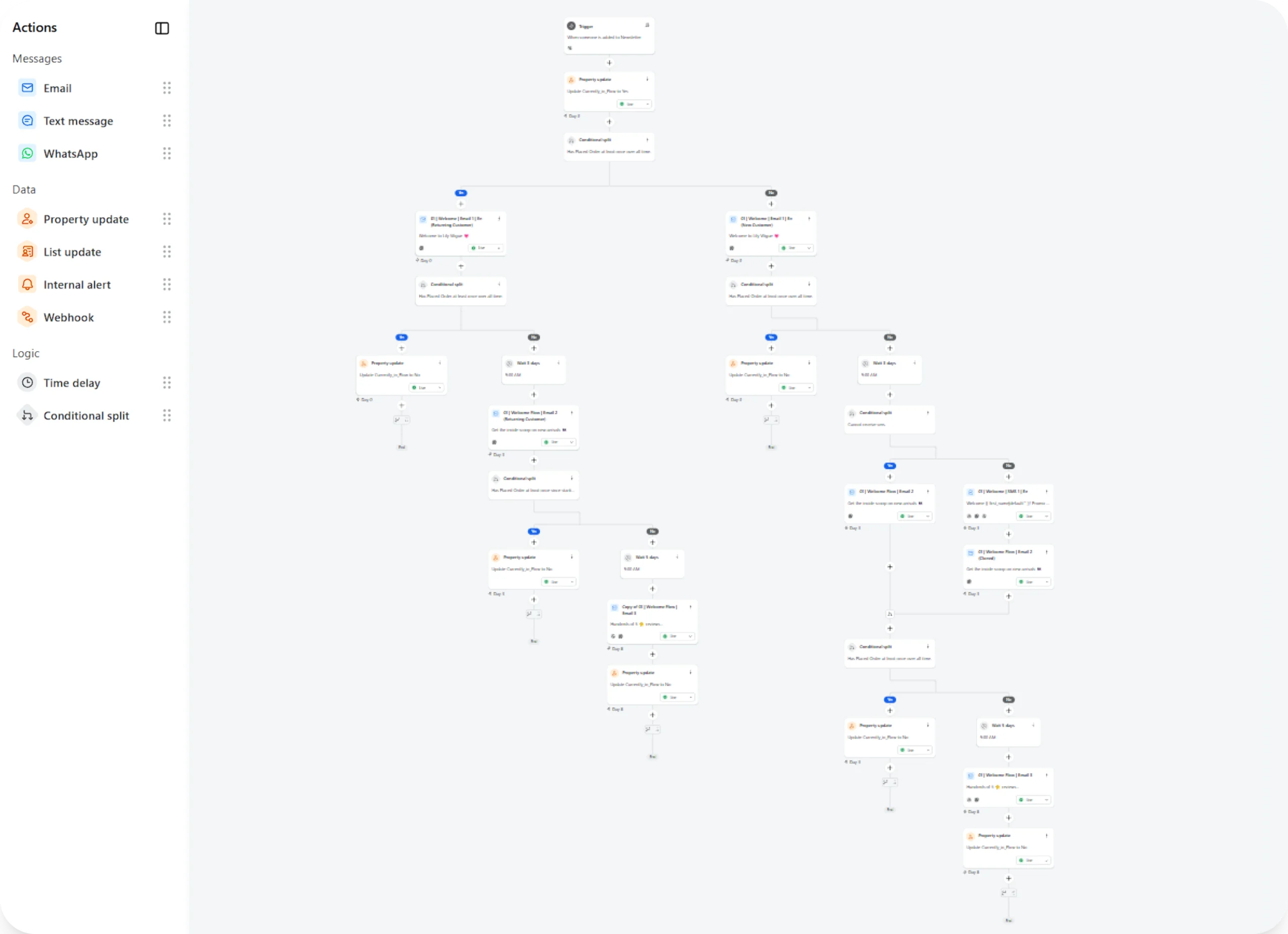
Purpose: Convert new email/SMS subscribers into first-time customers.
| Purpose | |
|---|---|
| Email 1 | Welcome to CUUP, introduce the brand, offer first-purchase incentive |
| Email 2 | Explain CUUP’s fit, comfort, minimalist design, and size-inclusive positioning |
| Email 3 | Help customers find their best style through fit guidance or product recommendations |
| Email 4 | Show customer reviews, social proof, and real-life comfort stories |
| Email 5 | Recommend best-selling bras, panties, bralettes, or matching sets |
| Email 6 | Final first-purchase reminder with discount or urgency |
Welcome Series Automation




The uploaded draft already included a Four-email welcome flow covering brand introduction,Explain CUUP’s fit, comfort, minimalist design, and size-inclusive positioning, Help customers find their best style through fit guidance or product recommendations and customer reviews, social proof, and real-life comfort stories.
we would expand it to seven emails so the flow can support product education, product ecosystem introduction, subscription adoption, and product recommendation without feeling rushed.
Flow 2 — Browse Abandonment
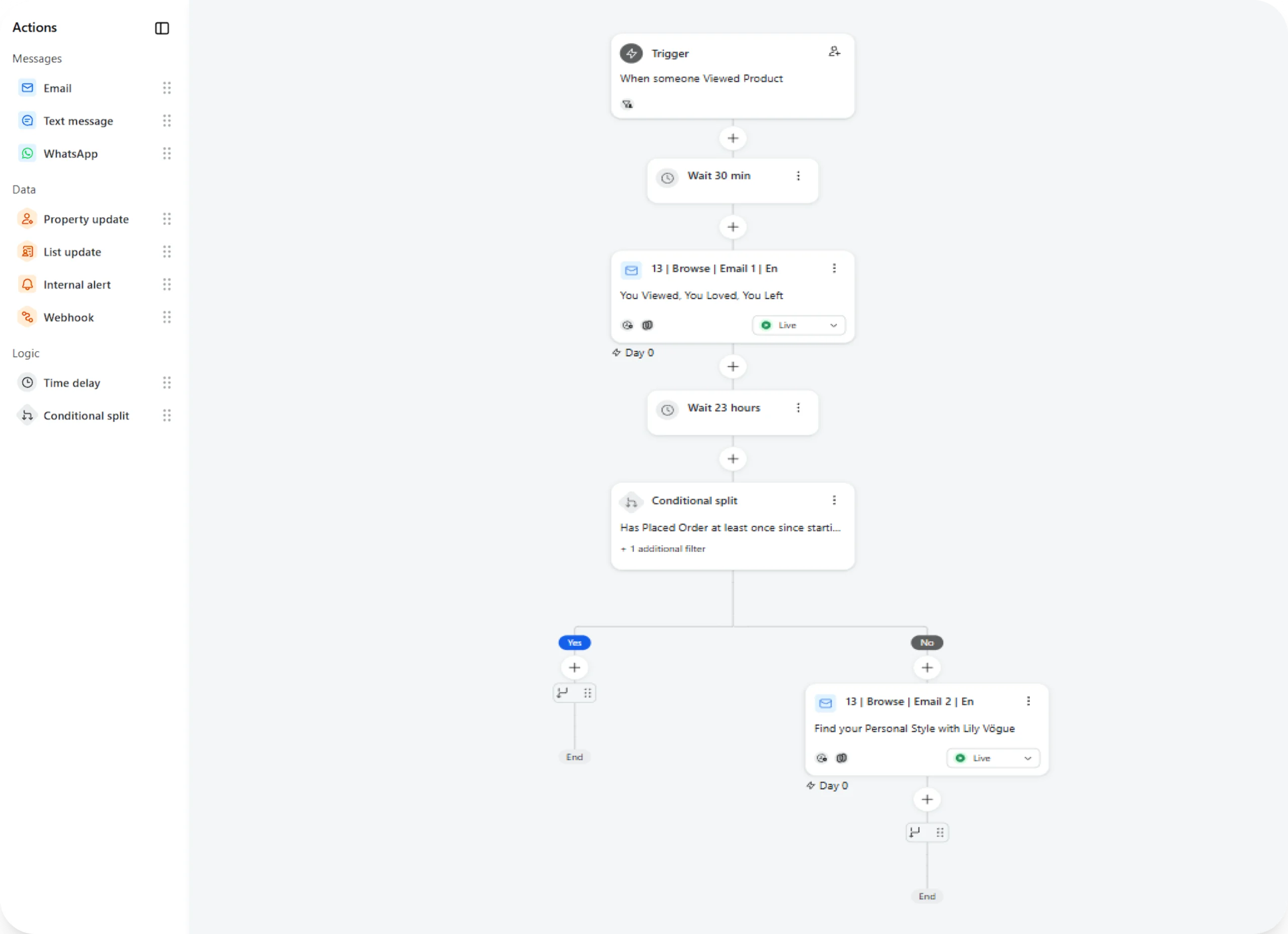
Purpose: Convert visitors who viewed a specific CUUP product but did not add it to cart.
This flow will be built around product-specific browse behavior. Instead of sending a generic “you viewed this item” email, Klaviyo will identify the exact product the customer viewed and trigger a sequence based on that product’s fit, comfort, support, reviews, and styling value.
For example, if a customer views CUUP The Balconette Bra but does not add it to cart, they will receive emails focused only on The Balconette Bra.
| Customer Behavior | Email Focus |
|---|---|
| Viewed CUUP The Balconette Bra | Send emails about its natural lift, unlined support, minimalist design, fit guidance, customer reviews, and why it works as an everyday bra |
| Viewed The Balconette Bra but did not add to cart | Explain the product benefits, comfort level, size-inclusive fit, and how it supports without heavy padding |
| Viewed The Balconette Bra multiple times | Send stronger reassurance with customer proof, fit education, return/exchange support, and “find your size” CTA |
| Viewed The Balconette Bra and matching panties | Recommend completing the set with matching bottoms, color pairing, and full-look styling |
| Viewed The Balconette Bra but purchased nothing | Retarget through email, SMS, and Meta with product-specific messaging around fit confidence and first-purchase incentive |
Example Email Sequence for CUUP The Balconette Bra:
| Purpose | |
|---|---|
| Email 1 | Remind the customer about The Balconette Bra and highlight its fit, natural shape, and everyday support with a discount |
| Email 2 | Share customer reviews, comfort feedback, and fit reassurance for this specific bra |
| Email 3 | Explain why The Balconette Bra is different from traditional padded bras, with a CTA to find the right size or complete the purchase |
This makes the browse abandonment flow feel more personal and relevant because the customer receives content based on the exact product they already showed interest in.
Welcome Series Automation
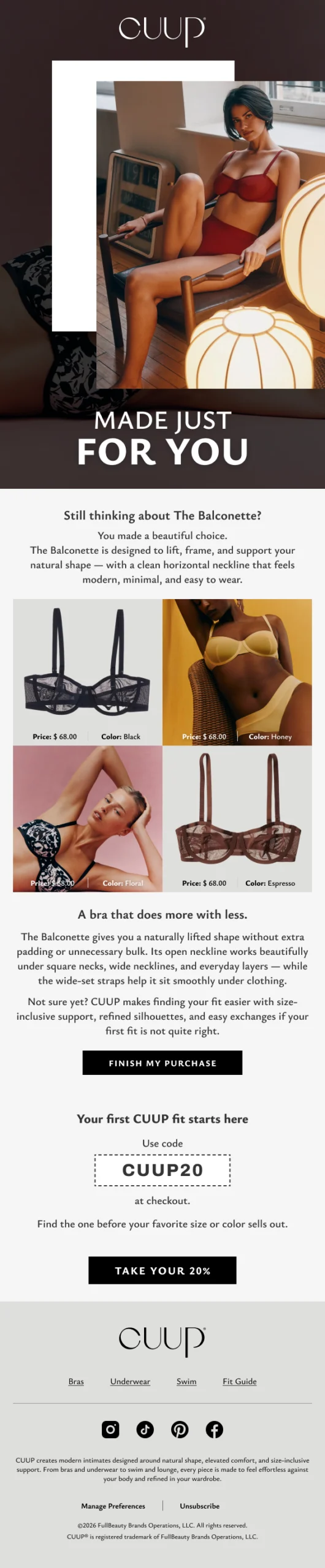
Here is one of the three email drafts we showcased for the Browse Abandonment flow. This email is designed to remind customers about a specific product they viewed, highlight its fit, natural shape, and everyday support, and encourage them to revisit and complete their purchase with a discount code to ensure engagement.
Segmentation Logic
CUUP should not send the same browse abandonment email to every visitor. The flow should identify the exact product the customer viewed and then recommend related CUUP products that naturally complete the fit, fabric, coverage, or styling need.
This makes CUUP’s browse abandonment flow more useful because the customer does not only receive a reminder about the product they viewed. They also receive relevant product suggestions that help them build a complete CUUP set based on style, fabric, coverage, comfort, and color interest.
Flow 3 — Checkout Abandonment
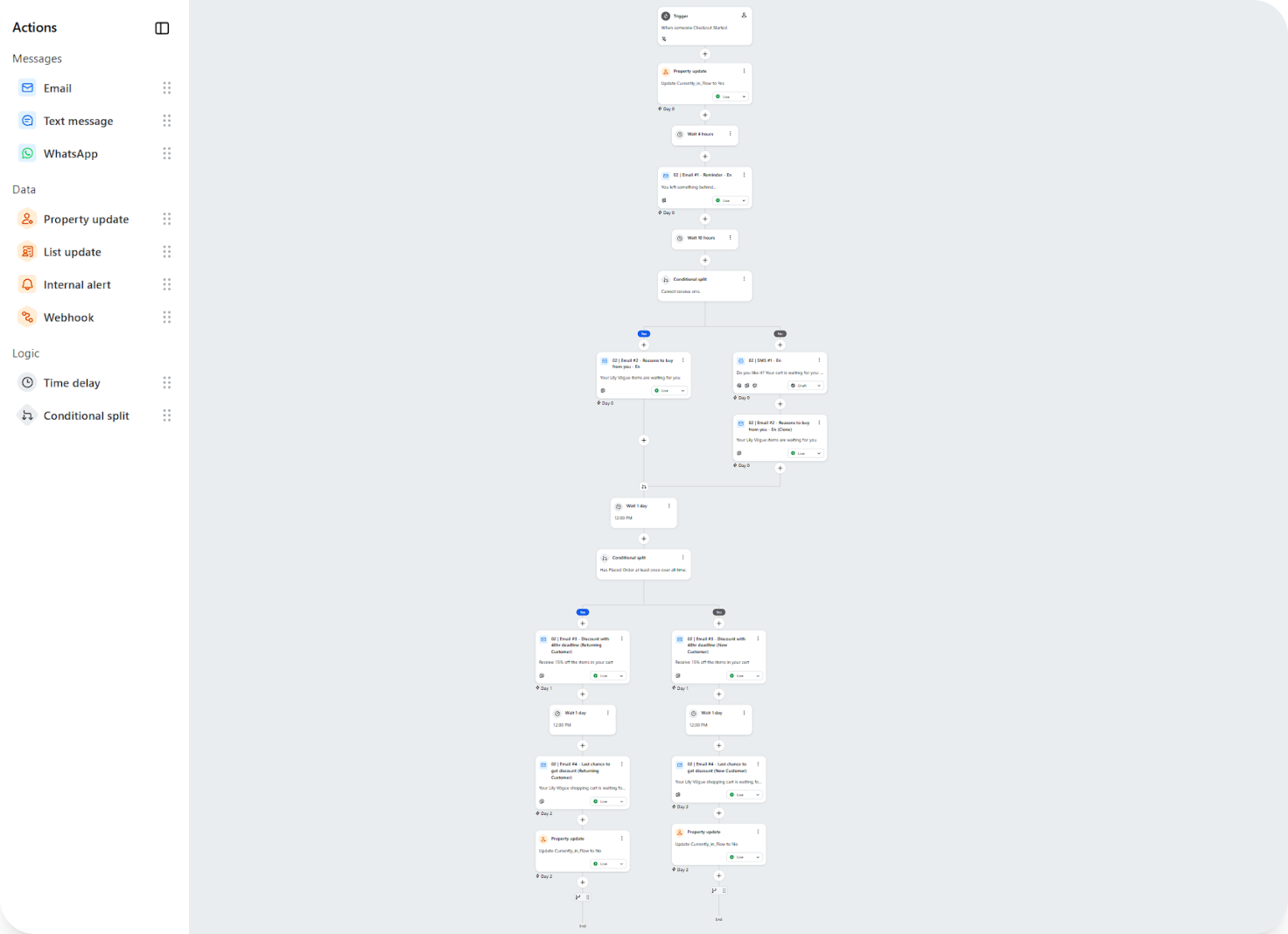
Purpose: Recover high-intent buyers who started checkout with a specific CUUP product but did not complete the order.
This flow will be customized based on the exact product left in checkout. For example, if a customer starts checkout with CUUP The Plunge – Mesh, the recovery sequence will focus only on that product’s fit, lightweight support, deep V styling, comfort, and purchase reassurance.
| Email/SMS | Timing | Purpose |
|---|---|---|
| Email 1 | 1 hour | Remind the customer that The Plunge – Mesh is still in checkout with a direct CTA to complete the order |
| SMS 1 | 2–4 hours | Send a short checkout reminder for SMS opt-ins |
| Email 2 | 12 hours | Reinforce fit, comfort, lightweight support, reviews, and size guidance |
| Email 3 | 24 hours | Final reminder with urgency, incentive, free shipping, or return/exchange reassurance if available |
Example Checkout Logic
| Customer Behavior | Recovery Strategy |
|---|---|
| Started checkout with The Plunge – Mesh | Send product-specific recovery emails focused on fit, deep V styling, comfort, and support |
| Added The Plunge – Mesh + matching panties | Encourage completing the full set with matching bottoms |
| Started checkout more than once | Use stronger reassurance, fit FAQs, reviews, and a limited incentive if needed |
| SMS opt-in but no purchase | Send a short reminder with a direct checkout link |
Welcome Series Automation

Here is another draft mail showcased for the checkout abandonment flow, which explains product-specific recovery emails focused on fit, deep V styling, comfort, and support.
Just like this, For each flow, we will create dedicated email campaigns with clearly defined audience segmentation. This approach ensures that every audience segment receives targeted and personalized communication that is relevant to their preferences, behavior, and engagement level.
Flow 4 — Post-Purchase Flow
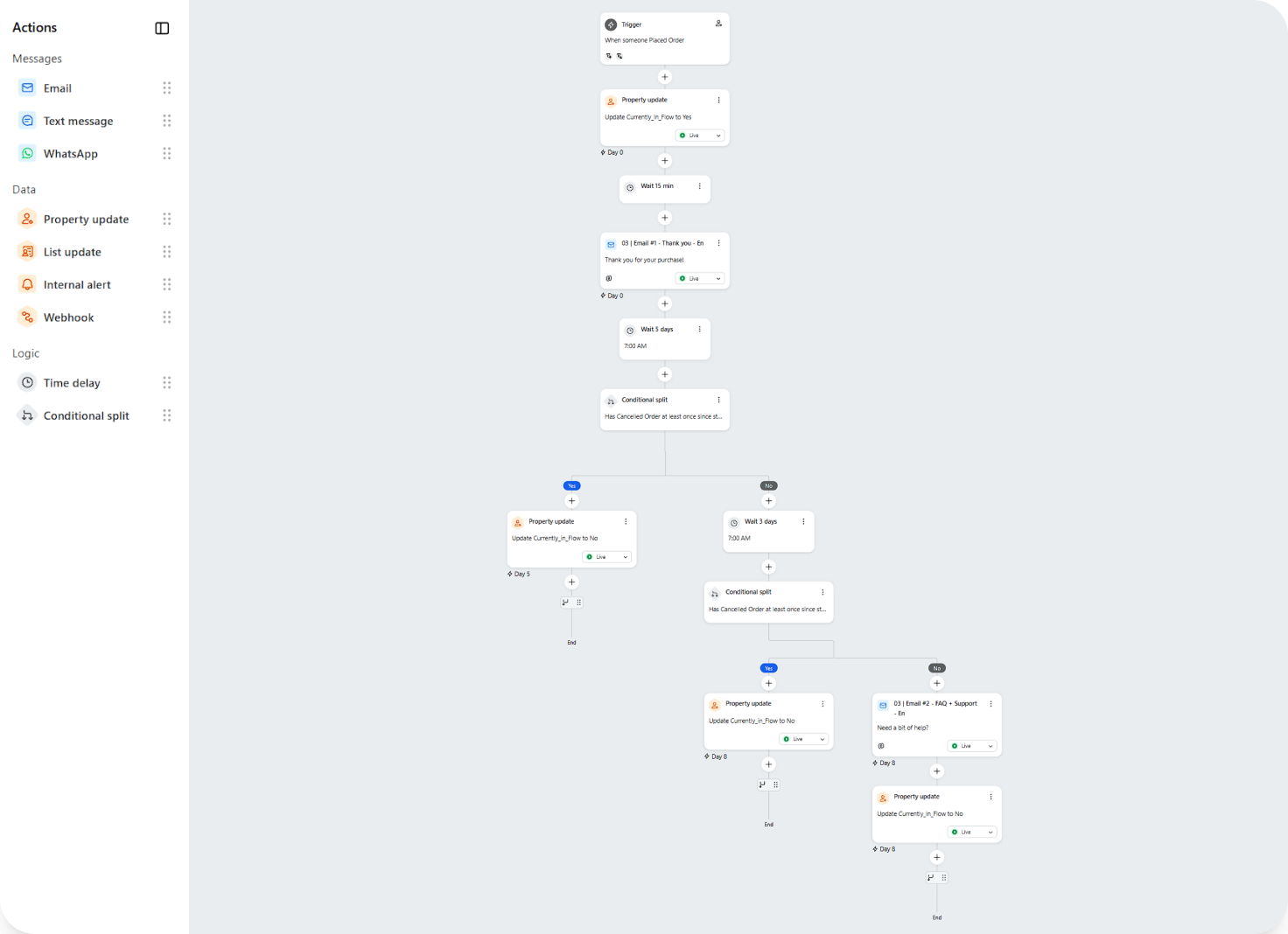
Purpose: Help first-time customers feel confident after purchase and increase repeat buying.
Entry Criteria:
| Purpose | |
|---|---|
| Email 1 | Thank the customer and confirm what to expect next |
| Email 2 | Share fit guidance, wear tips, and product care instructions |
| Email 3 | Recommend matching panties, bras, bralettes, or colors |
| Email 4 | Ask for review or feedback after the customer has received the product |
| Email 5 | Introduce the next best product based on what they purchased |
Flow 5 — Matching Set Cross-Sell Flow
Purpose: Increase AOV by encouraging customers to complete the set.
Entry Criteria:
| Purchase Behavior | Cross-Sell Strategy |
|---|---|
| Purchased a bra only | Recommend matching panties |
| Purchased panties only | Recommend matching bras or bralettes |
| Purchased one color only | Recommend other colors in the same style |
| Purchased a full set | Recommend another set or seasonal collection |
This flow is especially important for CUUP because intimates naturally support set-building and color expansion.
Flow 6 — Product Refresh / Replacement Flow
Purpose: Bring customers back when they may be ready to refresh or replace their intimates.
Entry Criteria:
| Customer Behavior | Message Focus |
|---|---|
| Purchased a bra months ago | Refresh your everyday fit |
| Purchased multiple bras | New colors or updated styles |
| Purchased panties | Restock everyday essentials |
| Purchased swimwear | Seasonal refresh or new collection |
| Has not purchased again | Fit-based winback offer |
This flow helps turn one-time buyers into repeat customers without relying only on discounts.
Overview
Overview
Overview